The Art of Alpine Flowers
Twelve extraordinary knives, inspired by historical watercolors
Four historical books, twelve different knife models, and the fascinating flora of the Alps form the basis for one of our most elaborate knife lines. With this project, we combine 19th-century botanical illustrations with modern 3D modeling, traditional knife making, metal casting, engraving, and cold enamel coloring.
The Inspiration – Four Historical Books on Alpine Flora
Between 1879 and 1884, the four-volume work "Die Alpenpflanzen – Nach der Natur gemalt" (The Alpine Plants – Painted from Nature) was published by the Prague-based publisher F. Tempsky. The books contain approximately 400 colored plant illustrations by the Austrian painter Joseph Seboth, accompanied by botanical descriptions originally written by Ferdinand Graf.
What was special about these illustrations was their creation: The plants were collected in the Alps during their often short flowering season and brought to the painter as fresh as possible. The illustrations were not to be based on dried specimens or existing drawings, but rather to reproduce the natural forms and colors of living plants as accurately as possible.
The result is an impressive work that combines scientific observation of nature with exceptional artistic care. The depicted plants originate from different regions of the Alps. The cover images of the four volumes feature Mont Blanc, the Großvenediger, the Jungfrau, and the Dachstein.
Twelve Knives – Twelve Alpine Flowers
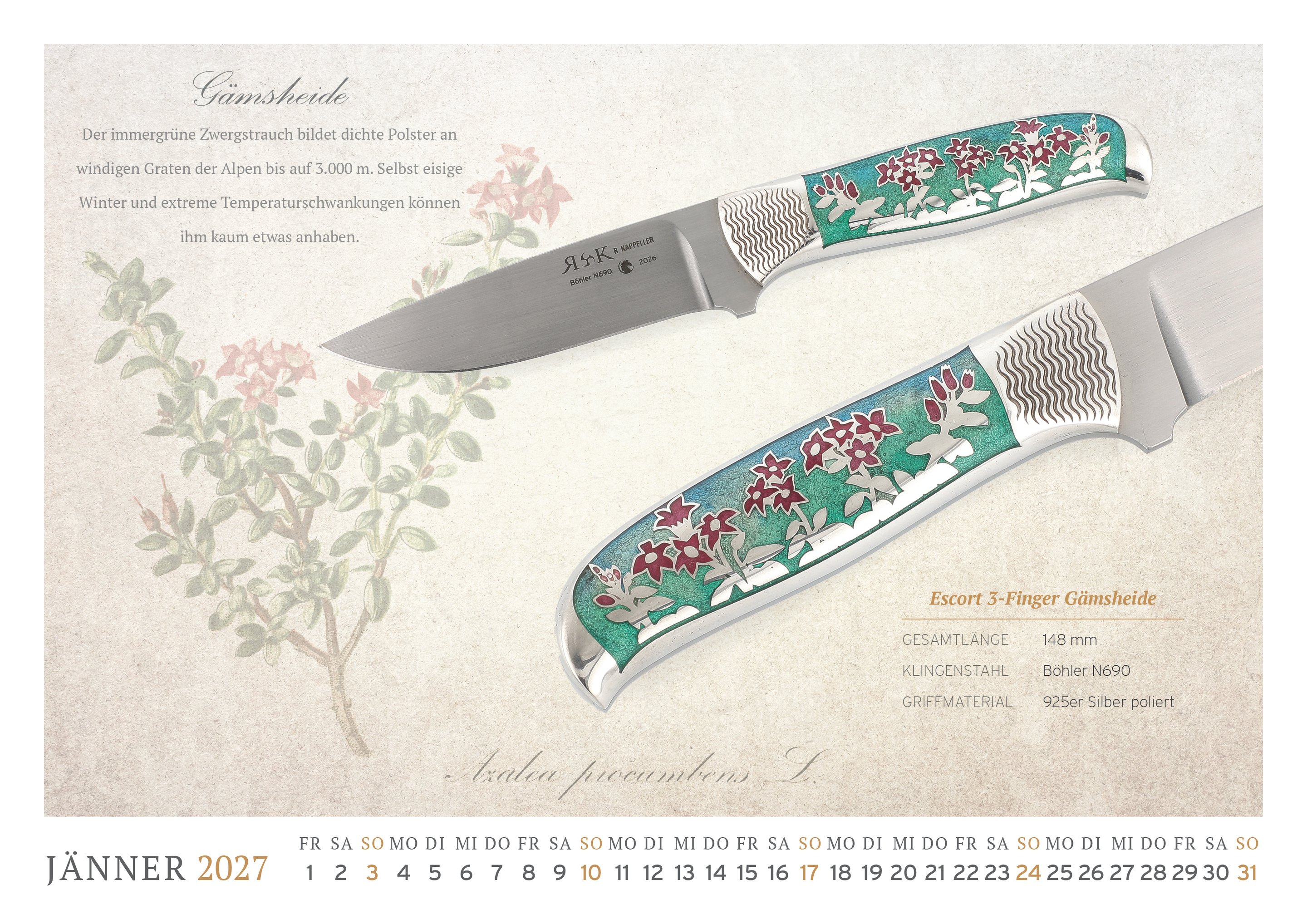
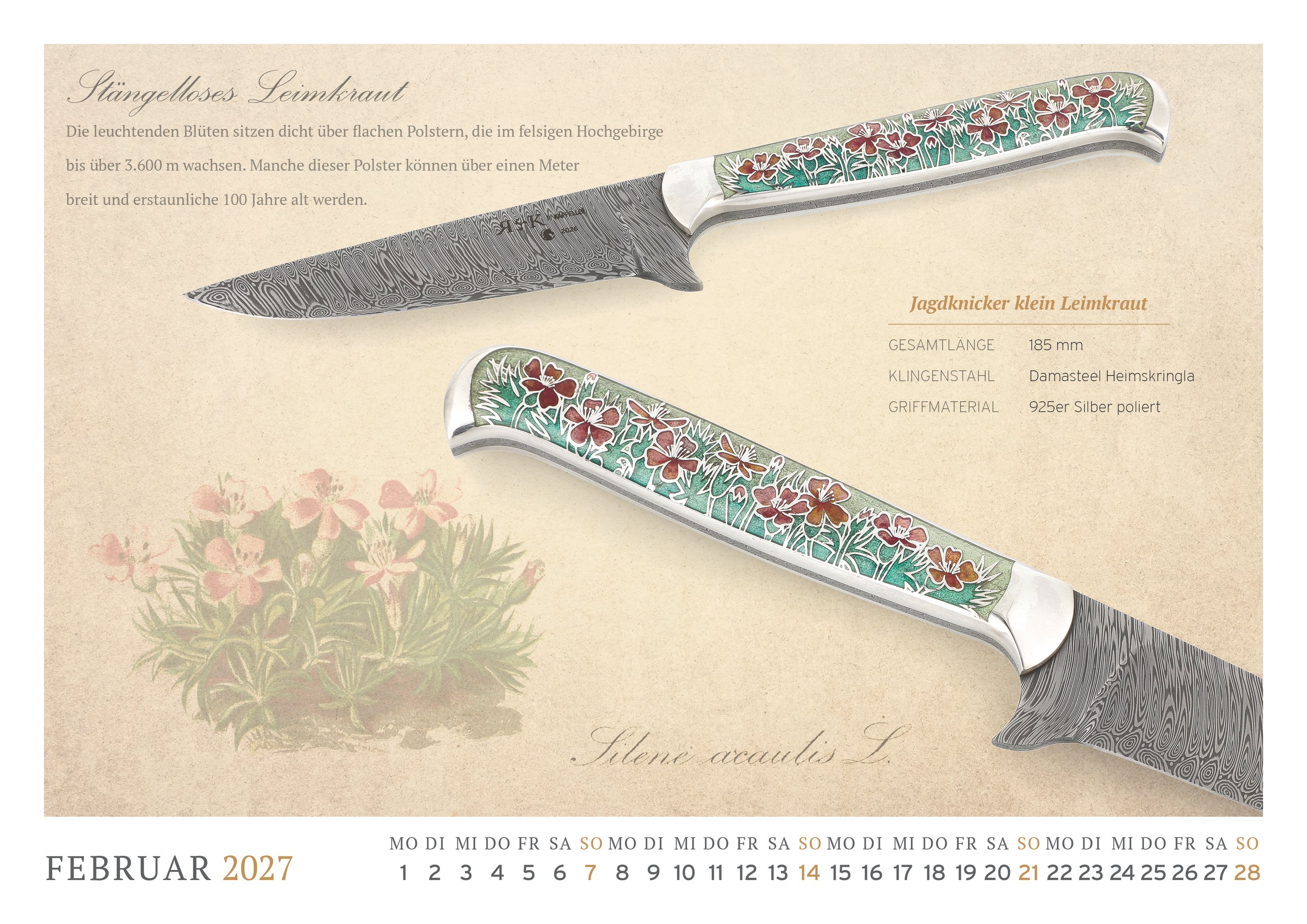
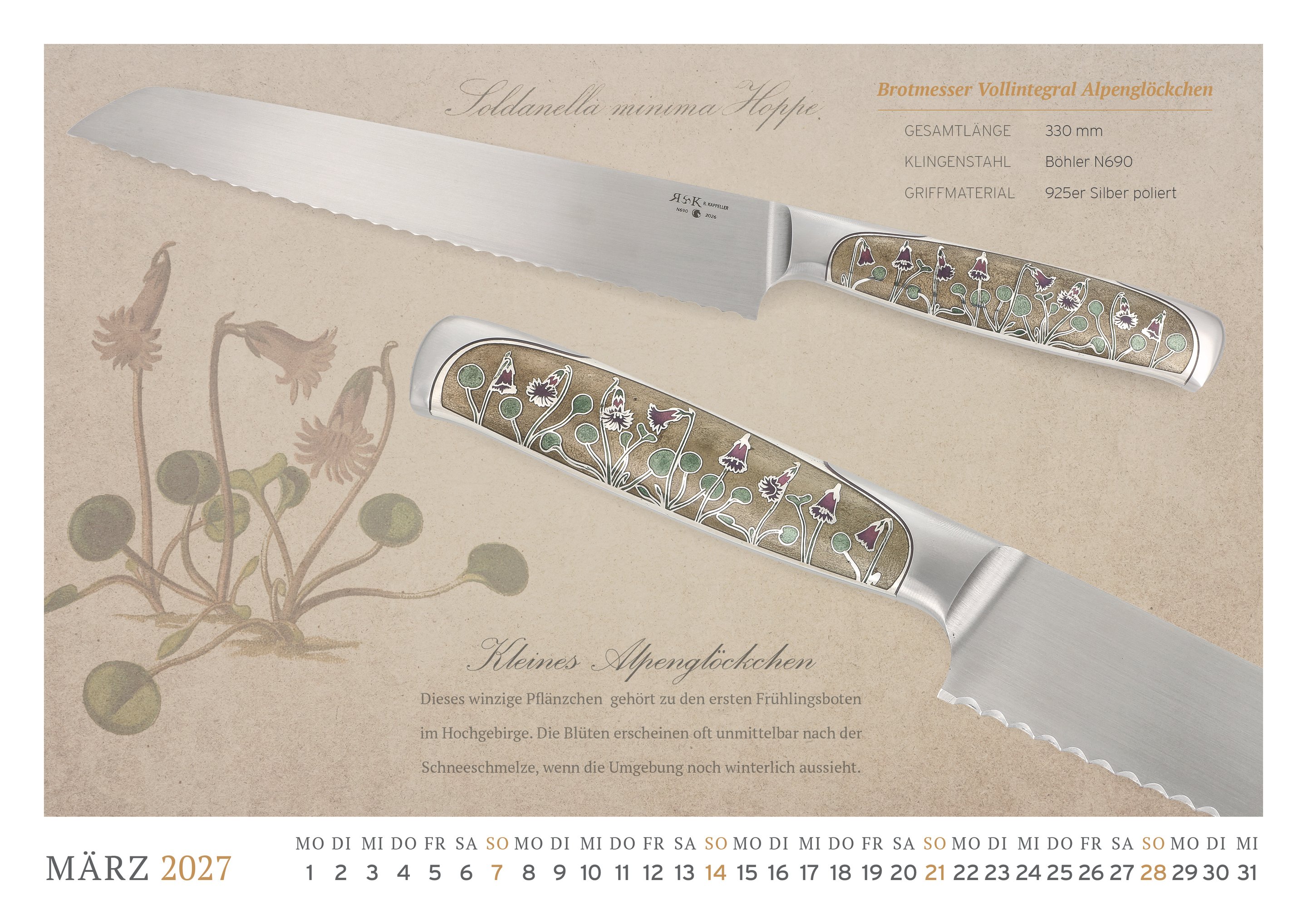
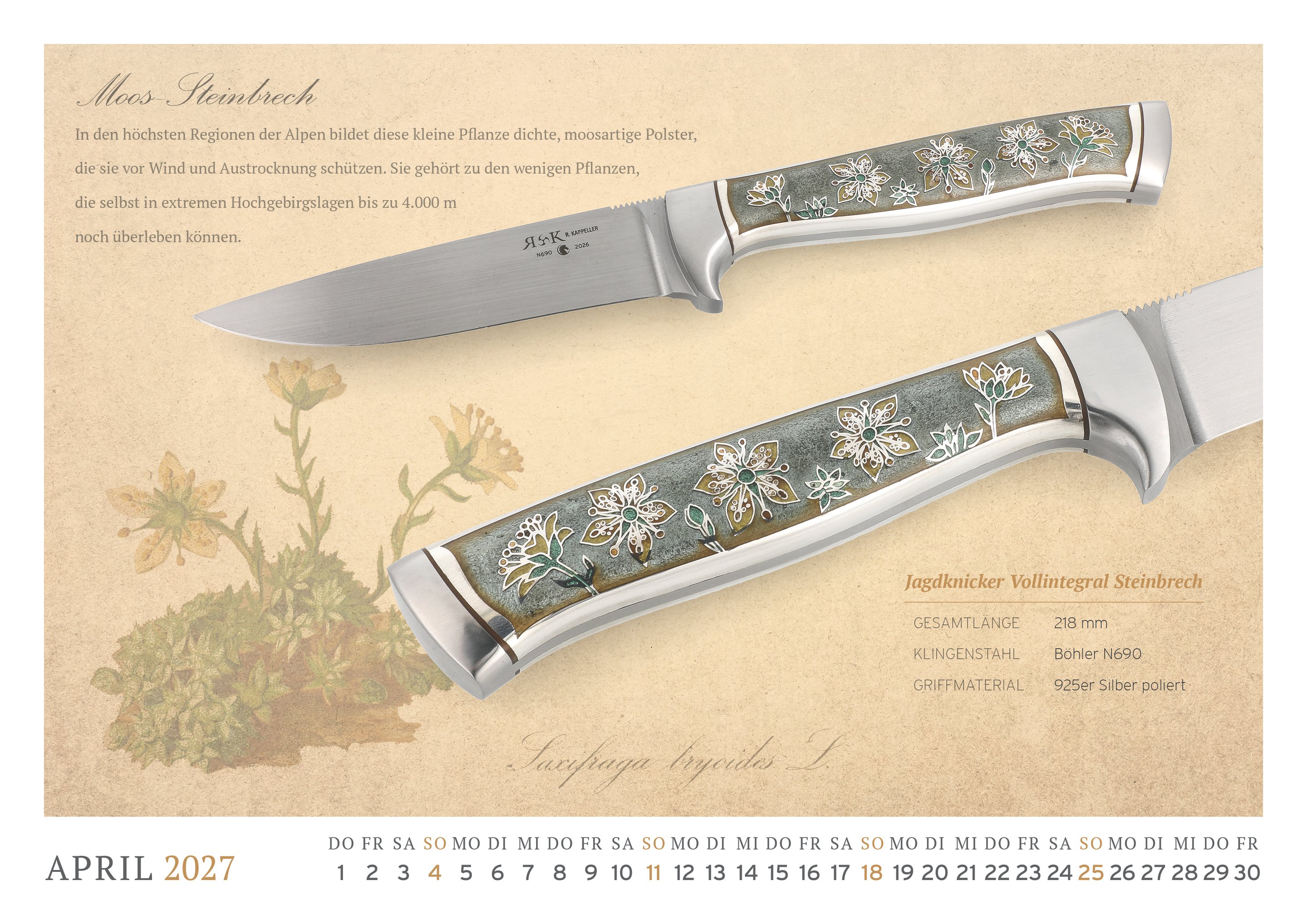
From historical botanical illustrations, we selected twelve different floral motifs and transferred them to individually designed knife handles made of silver or bronze.
Our goal was to reproduce the characteristic shapes and colors of the alpine flowers as faithfully as possible while simultaneously creating a diverse line of knives.
The result is a collection of kitchen knives, hunting knives, outdoor knives, and compact three-finger knives. Different blade shapes, handle designs, and finishes give each model its own unique character, while the floral motifs unite the twelve knives.
From Digital Modeling to Metal Casting
Production began with the three-dimensional design of the knife handles on the computer. Even at this stage, the selected alpine flowers were modeled as three-dimensional reliefs on the handle surfaces and adapted to their varying shapes.
To reduce weight, some of the metal handles were designed with a partial hollow construction. These cavities were later filled with resin to ensure stability.
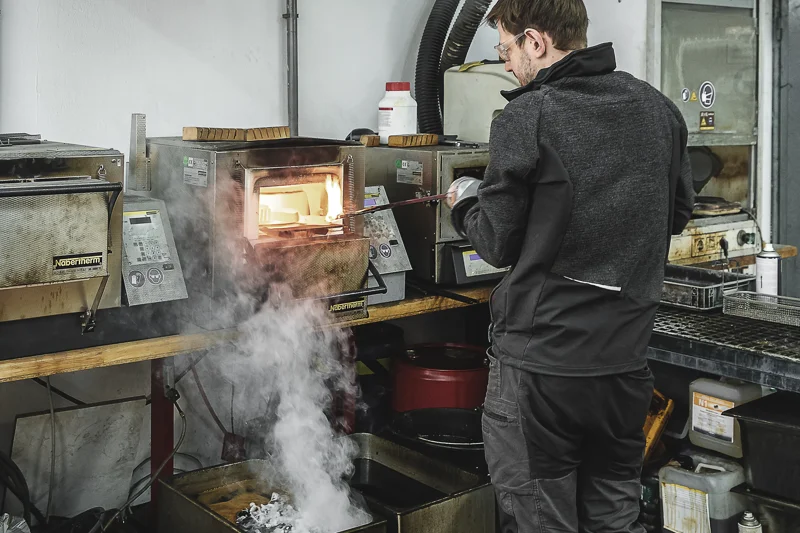
The finished 3D models were produced using a resin 3D printer and then cast in silver or bronze.
The larger and more complex castings, in particular, placed high demands on the manufacturing process. Material distortion, irregular casting surfaces, and the necessary post-processing required considerable experience and meticulous craftsmanship.
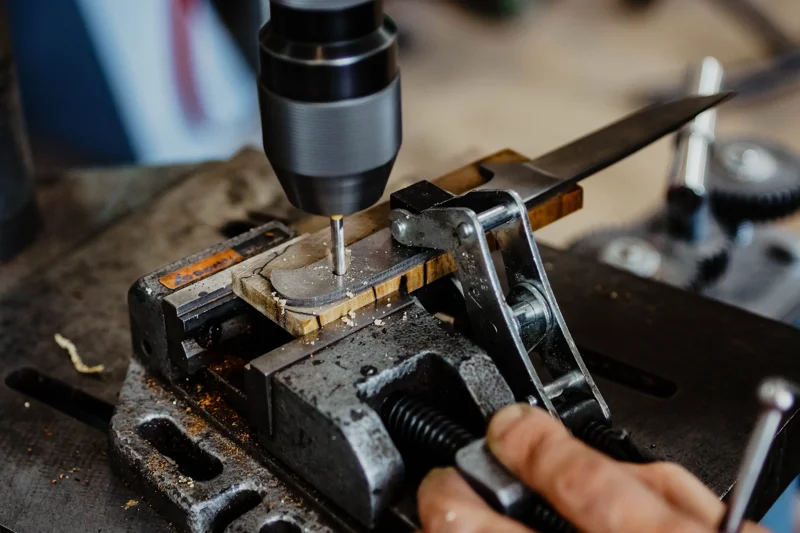
The matching knife blades were created concurrently. The cast handles were carefully fitted, glued to the blades, and further secured with concealed rivets.
Engraving and Color – Alpine Flowers Come to Life
After assembly, the actual artistic elaboration began. The already three-dimensional plant motifs were re-engraved by hand, textured, and finished with fine details.
The coloring presented a particular challenge. Carefully matched cold enamel was used to create the blossoms, leaves, and backgrounds, aiming to reproduce the natural colors of the historical illustrations as authentically as possible.
The enameled surfaces were then ground and polished. The silver and bronze surfaces also received their individual character through polishing, texturing, and patination.
The interplay of different metal surfaces, fine engravings, and colored cold enamels gives each knife its unique radiance.
An homage to the beauty of Alpine flora
With this knife line, we combine our fascination with alpine flora with the diverse possibilities of our craftsmanship.
What was captured in meticulously painted plant portraits some 150 years ago finds a new form of expression today in engraved and colored metal.
The twelve knives unite modern manufacturing techniques with traditional knife-making and goldsmithing craftsmanship. Each model is a unique work of art – inspired by the beauty of the Alps and the passion to preserve it permanently through traditional craftsmanship.