A knife for Tim Mälzer
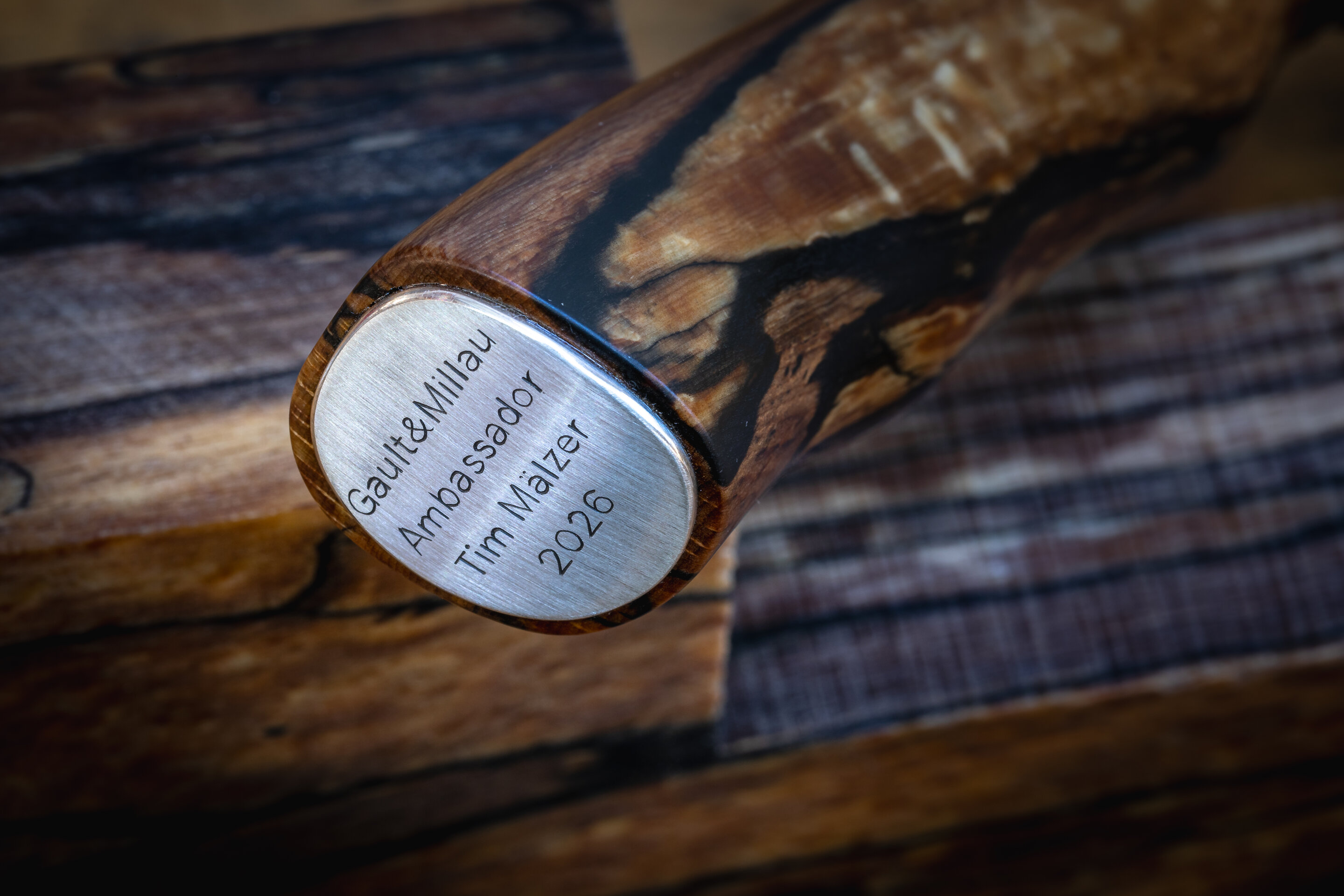
Gault&Millau Ambassador 2026
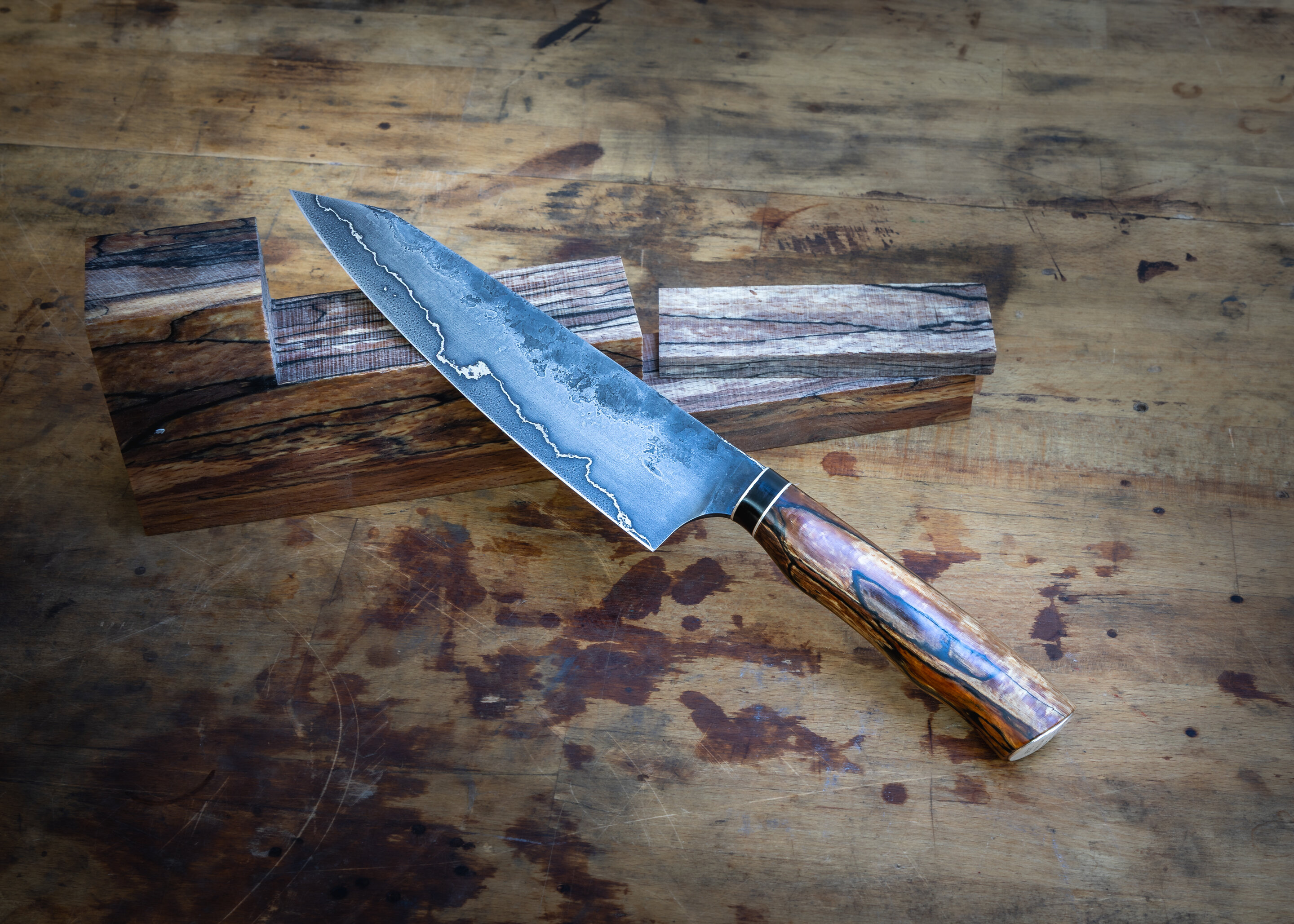
Total length: 320 mm
Blade length: 195 mm
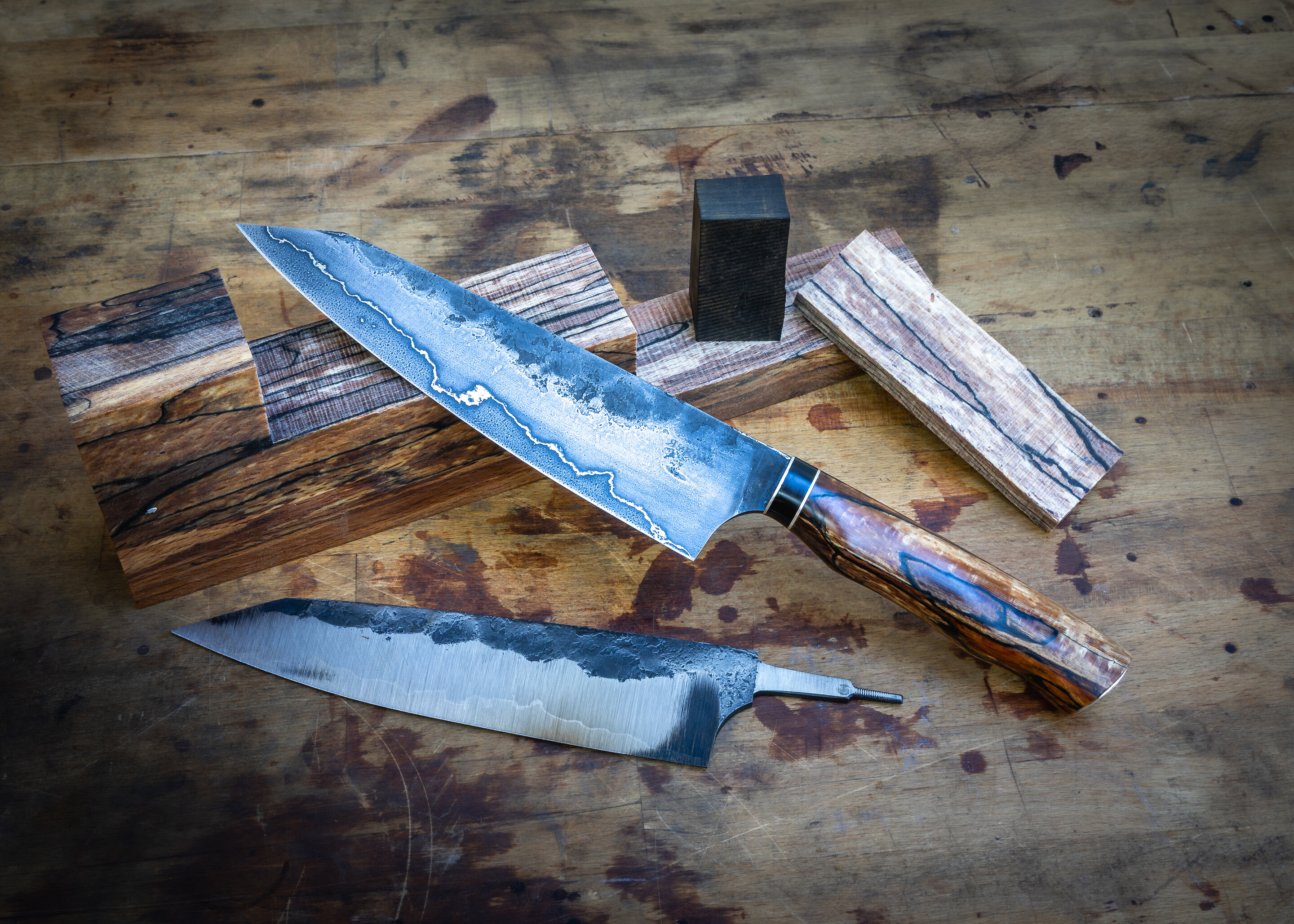
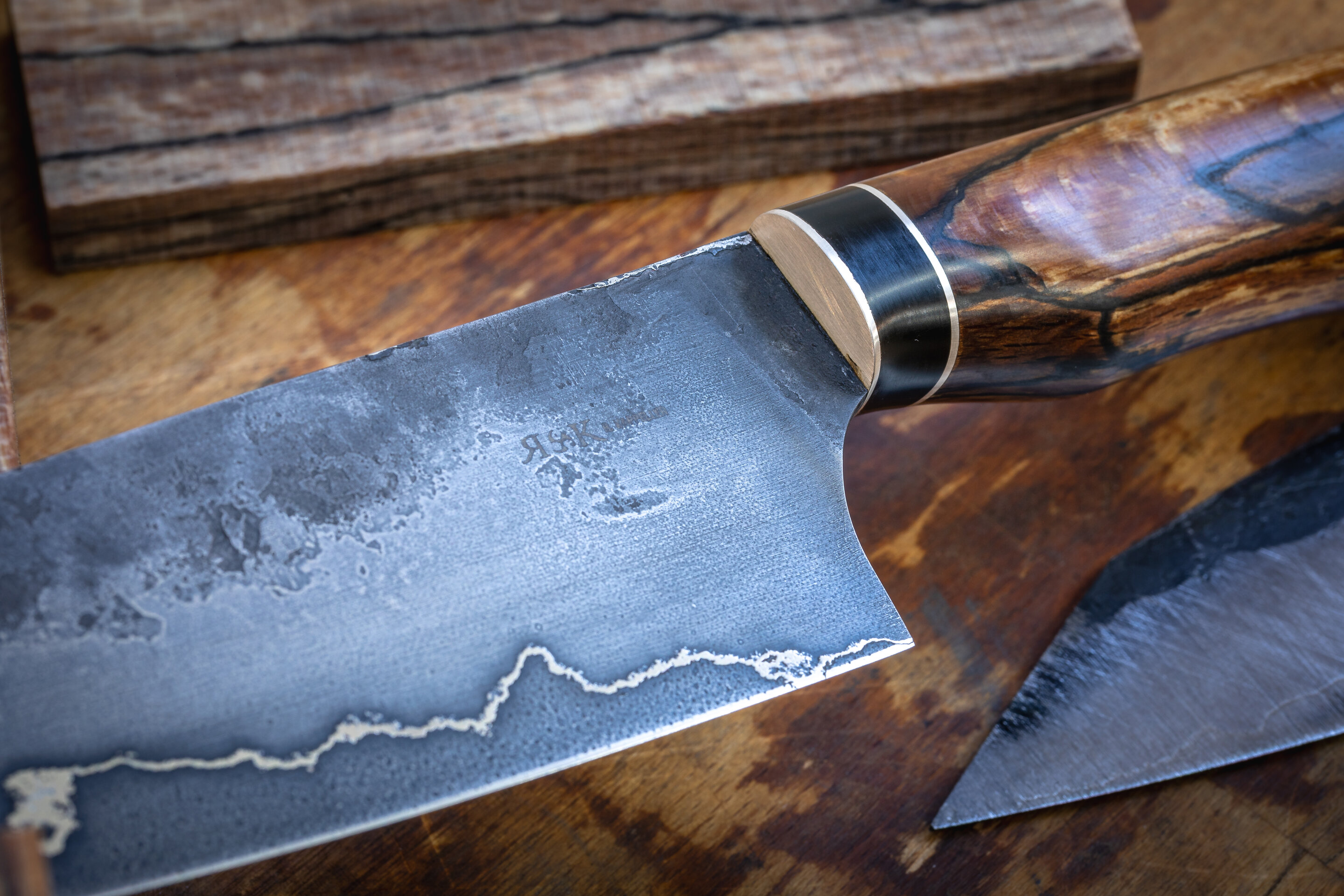
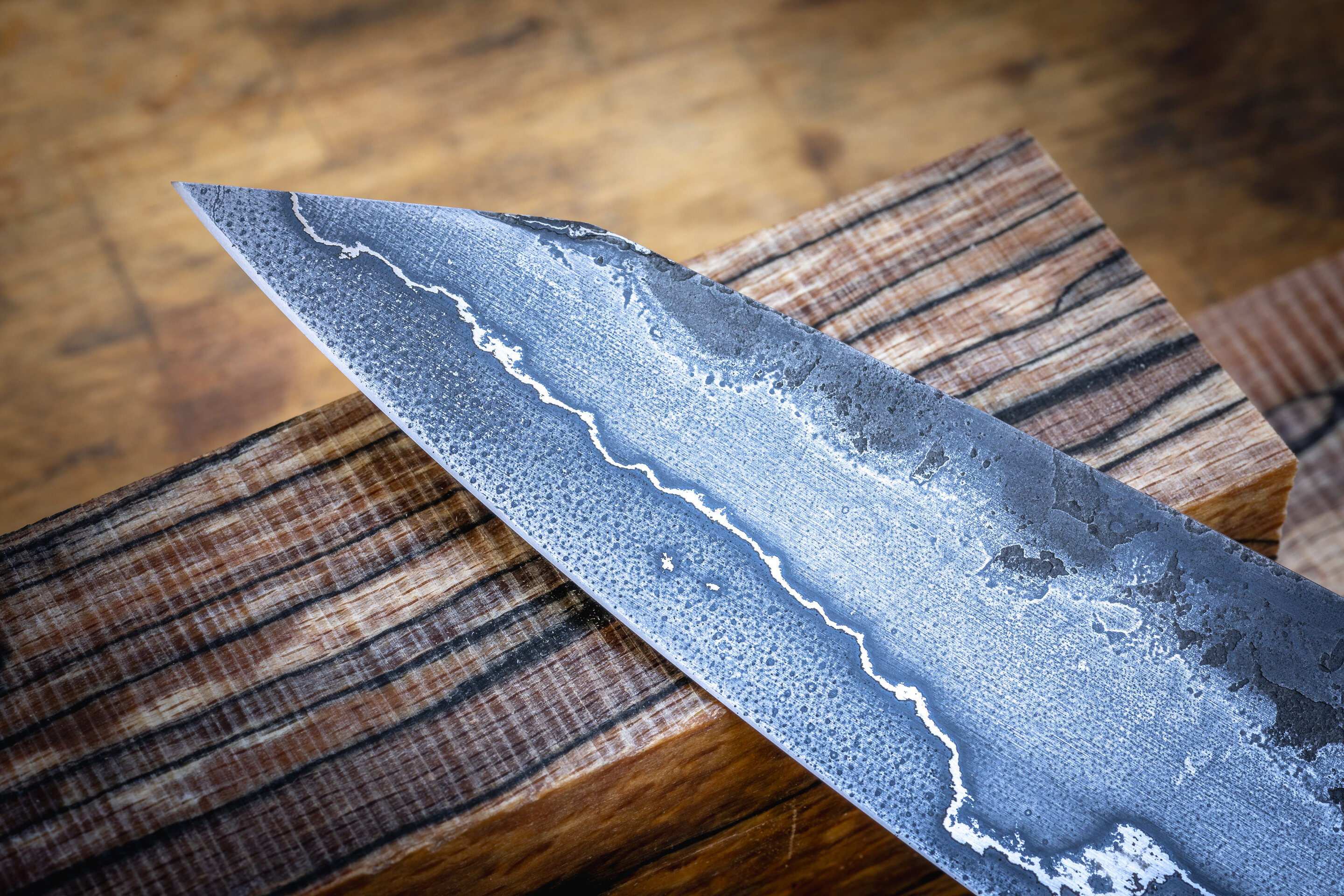
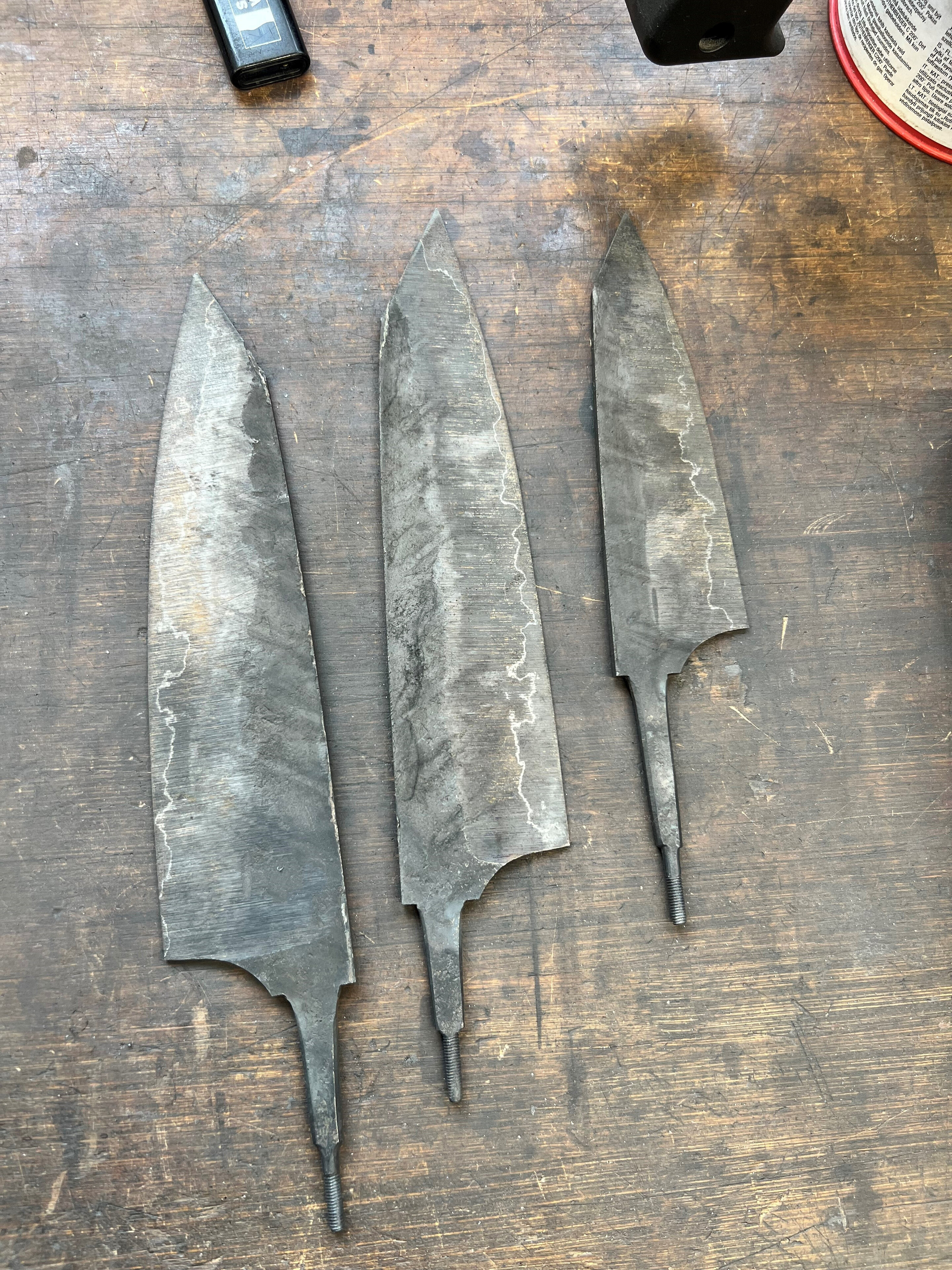
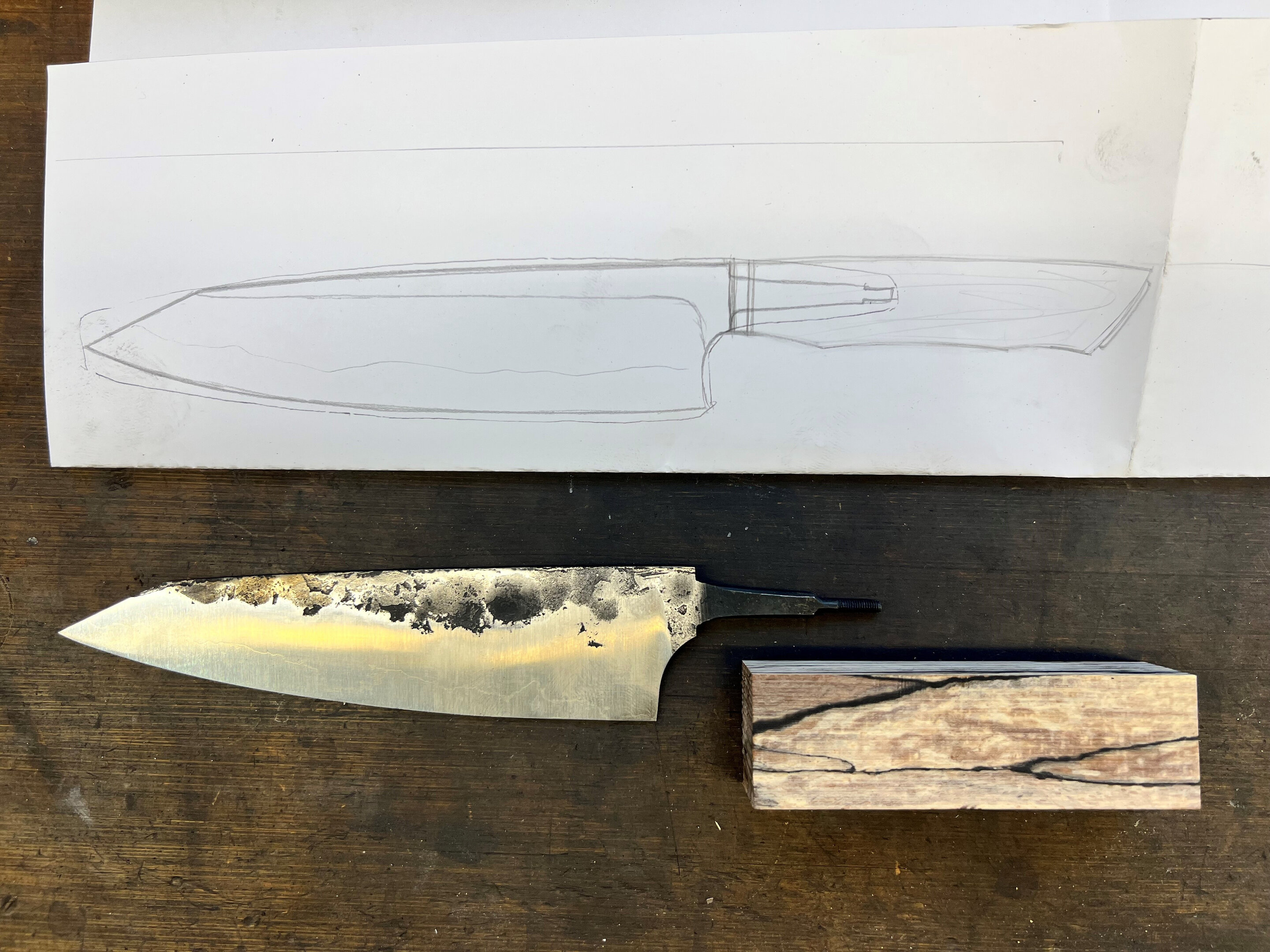
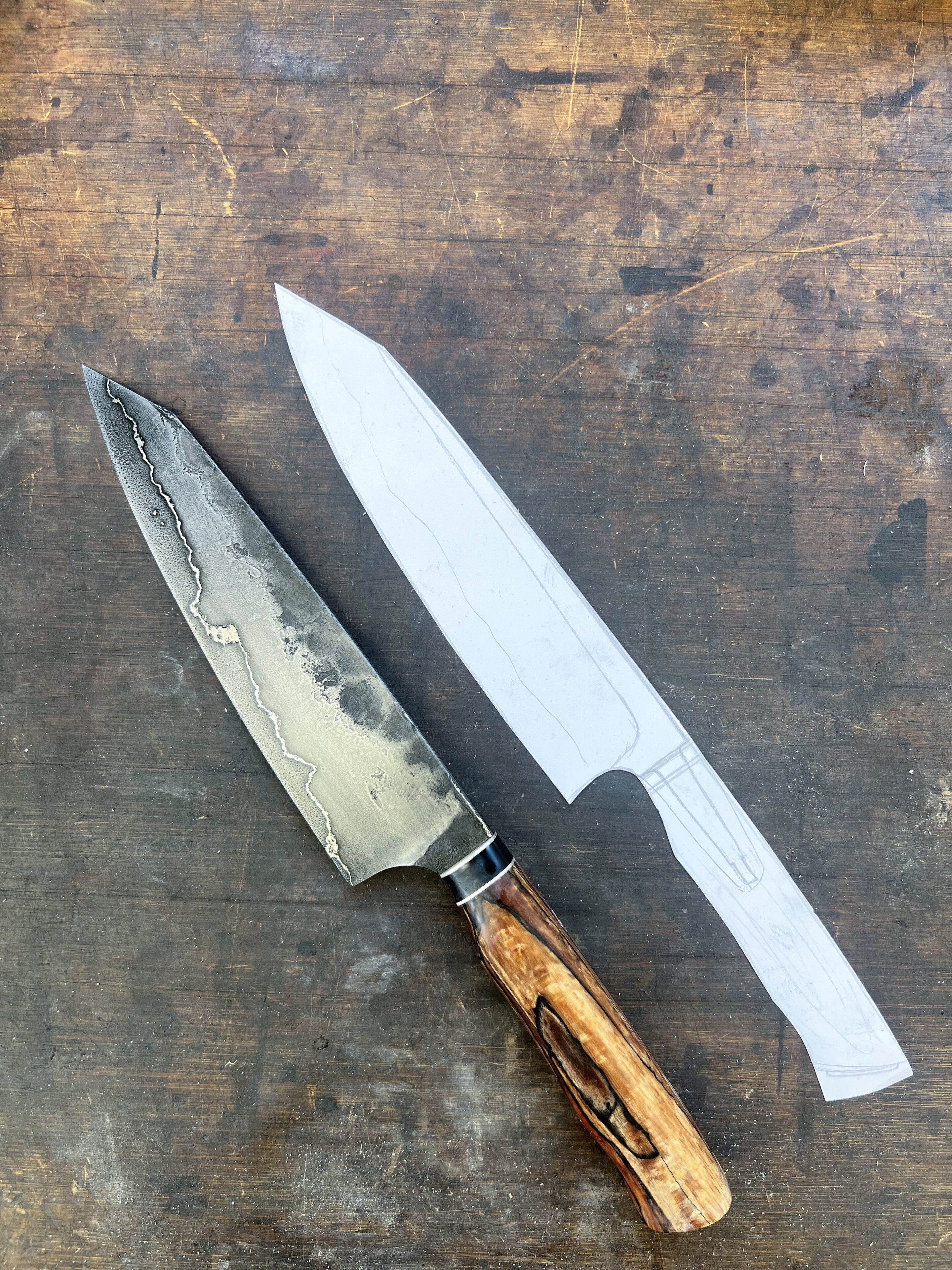
Blade steel: hand-forged multi-layered steel with a nickel interlayer
Handle material: stabilized knotty beech wood
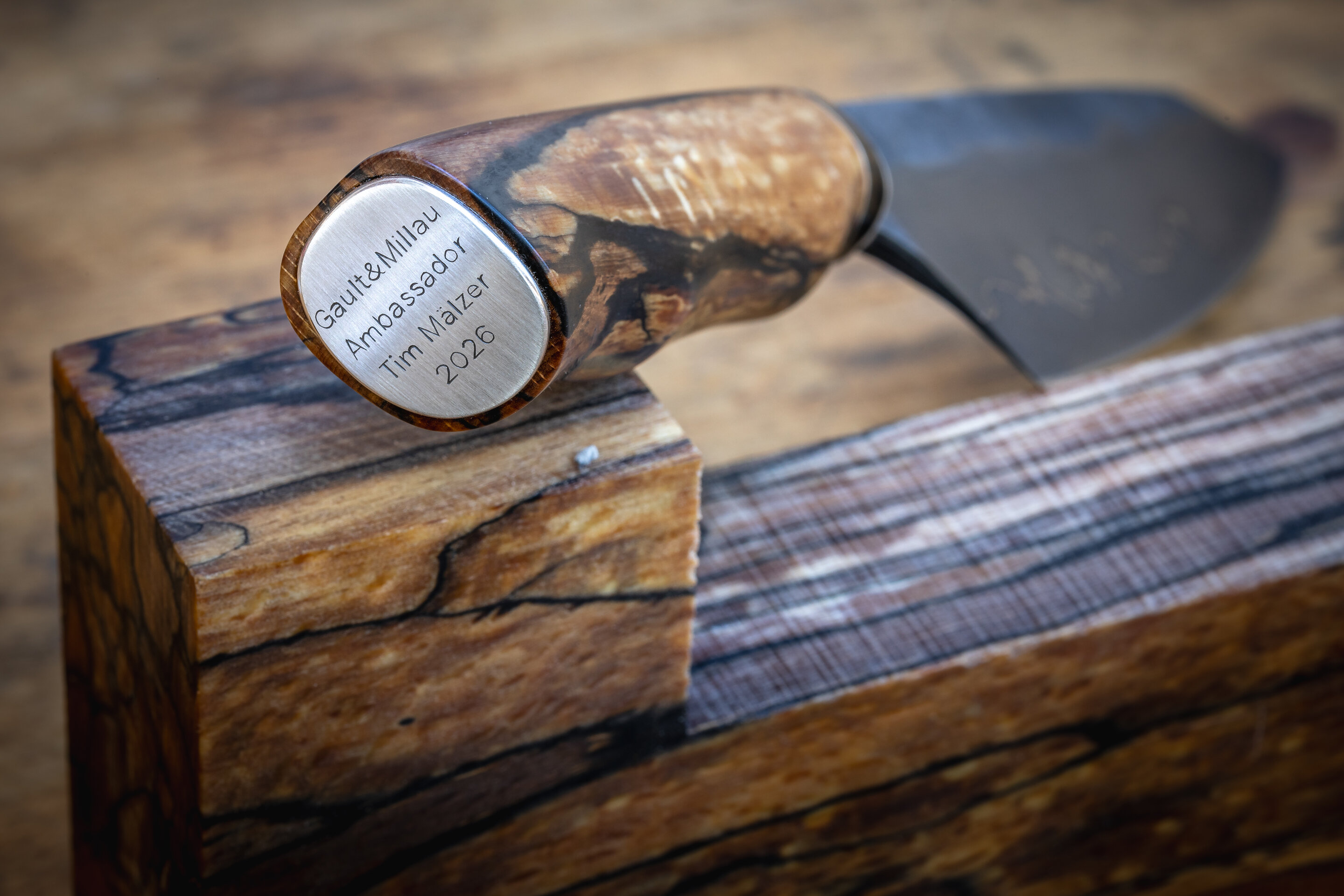
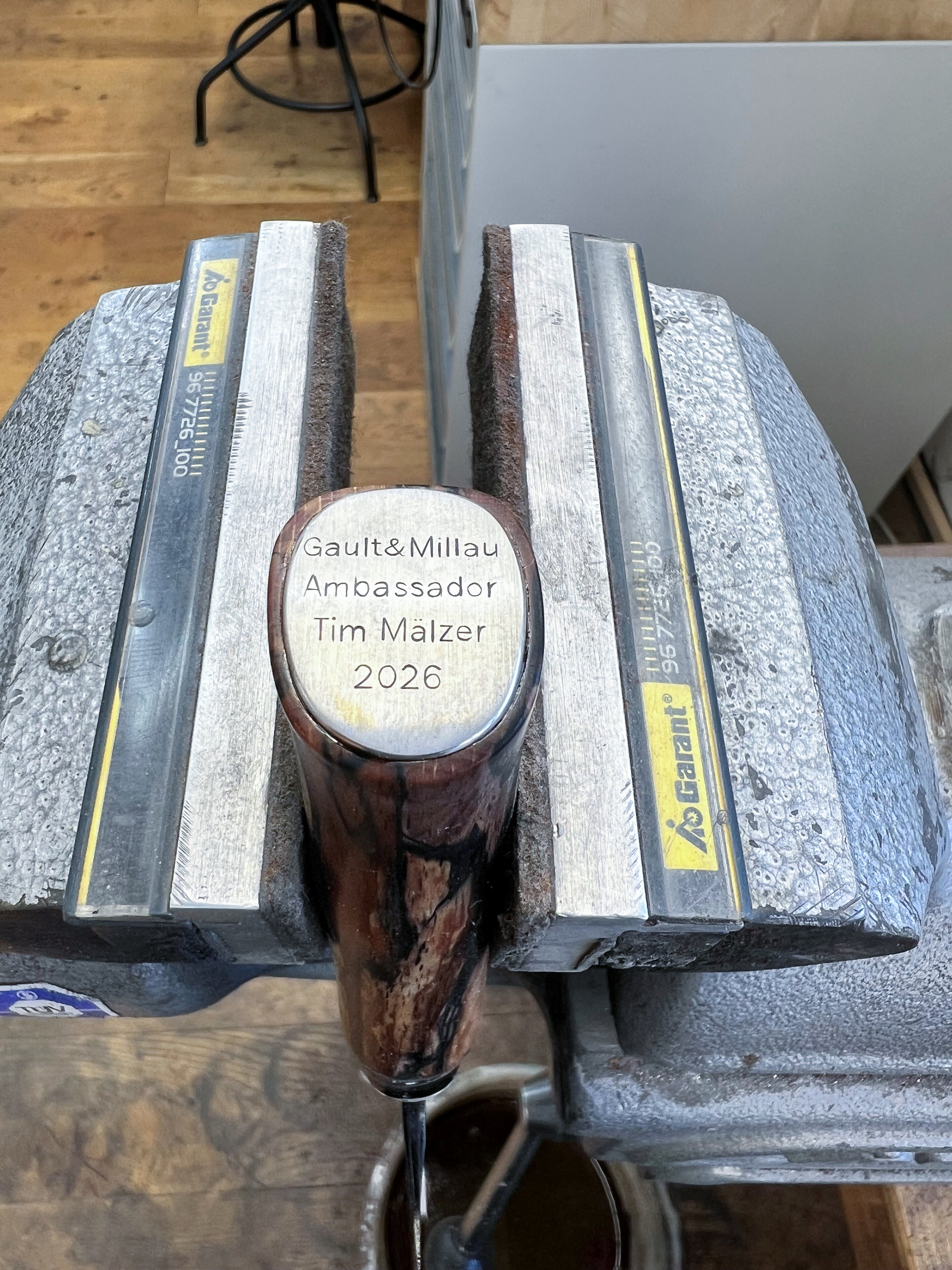
End cap: 925 silver
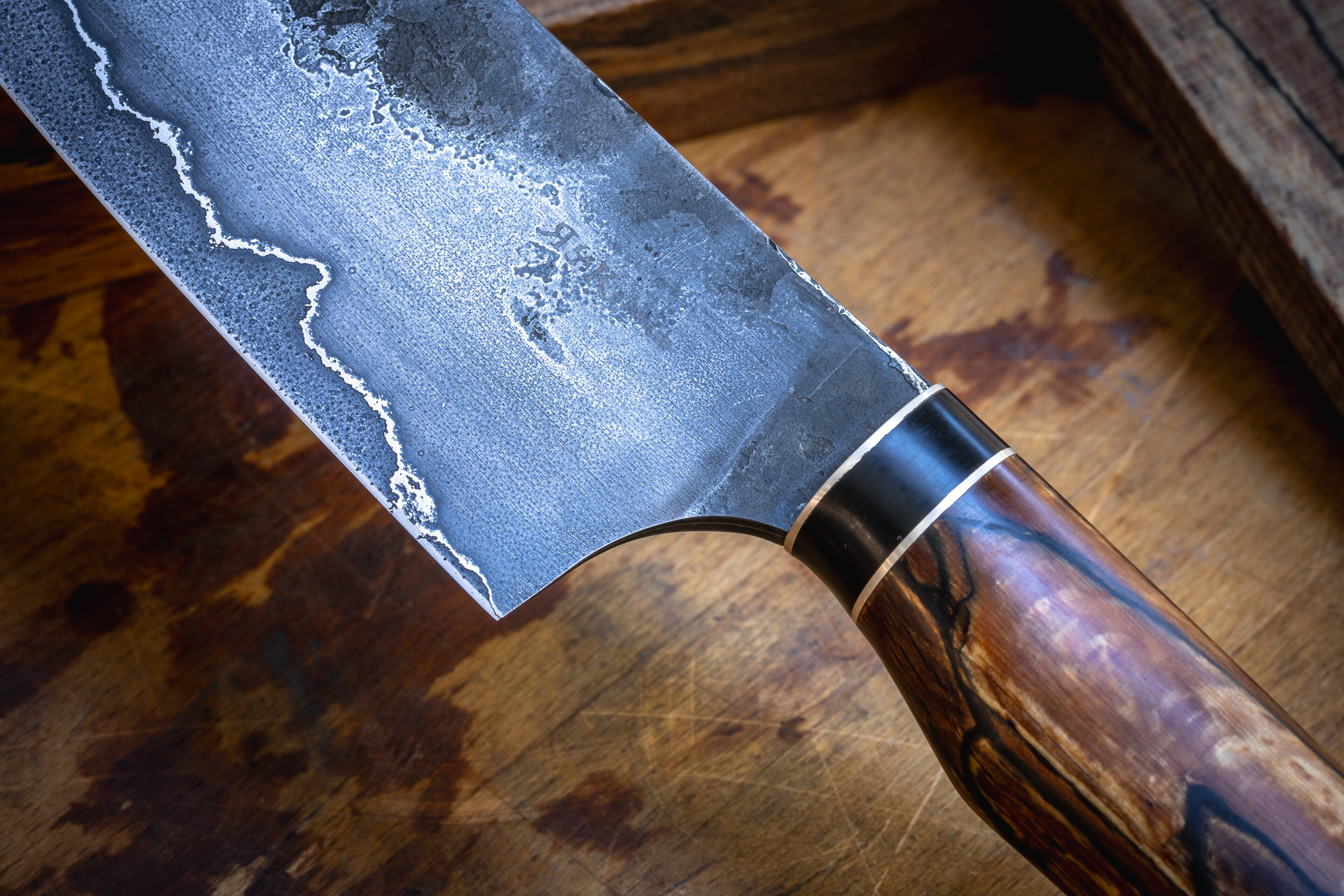
Front fitting: 925 silver and jet (fossilized lignite)
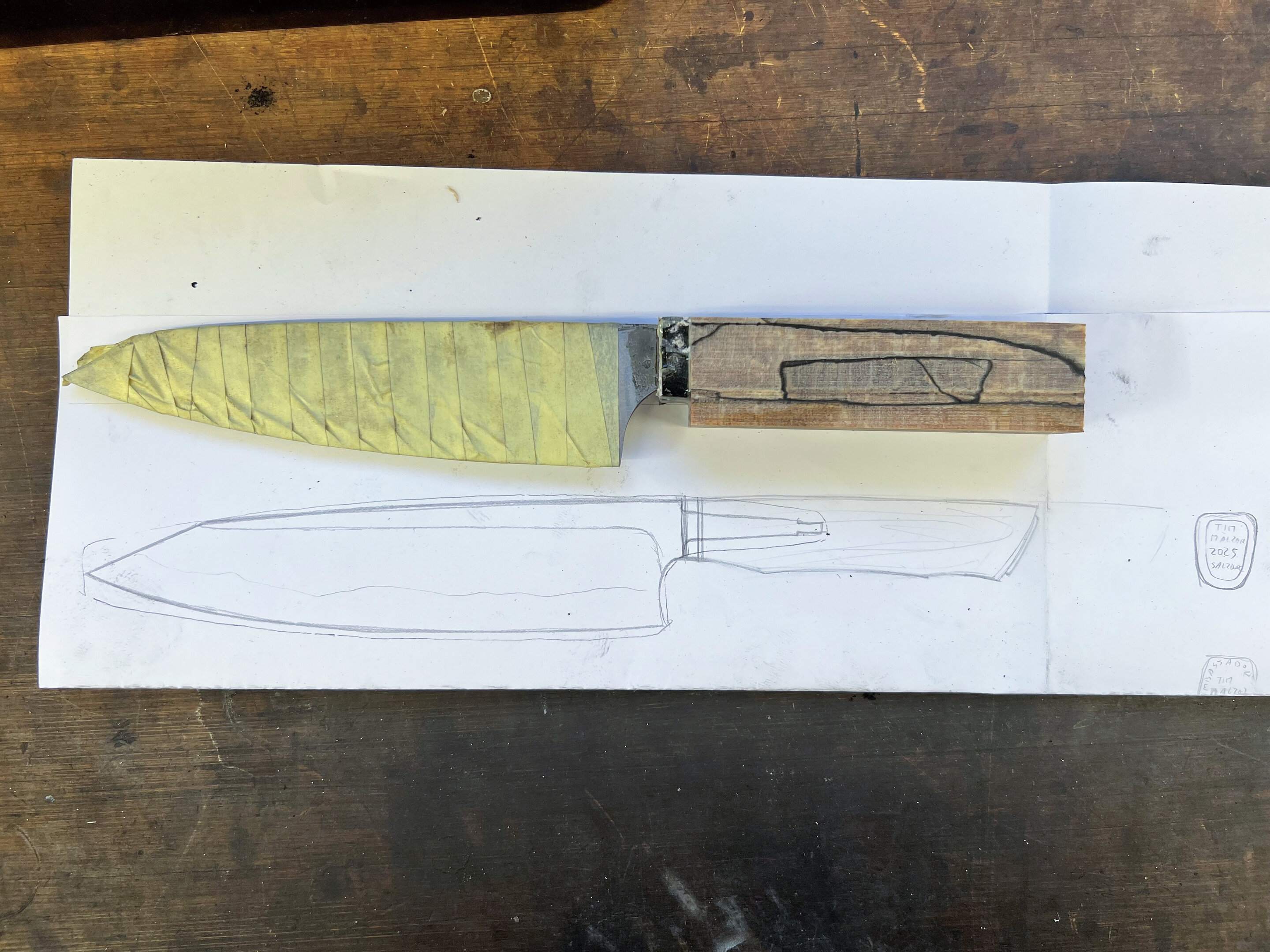
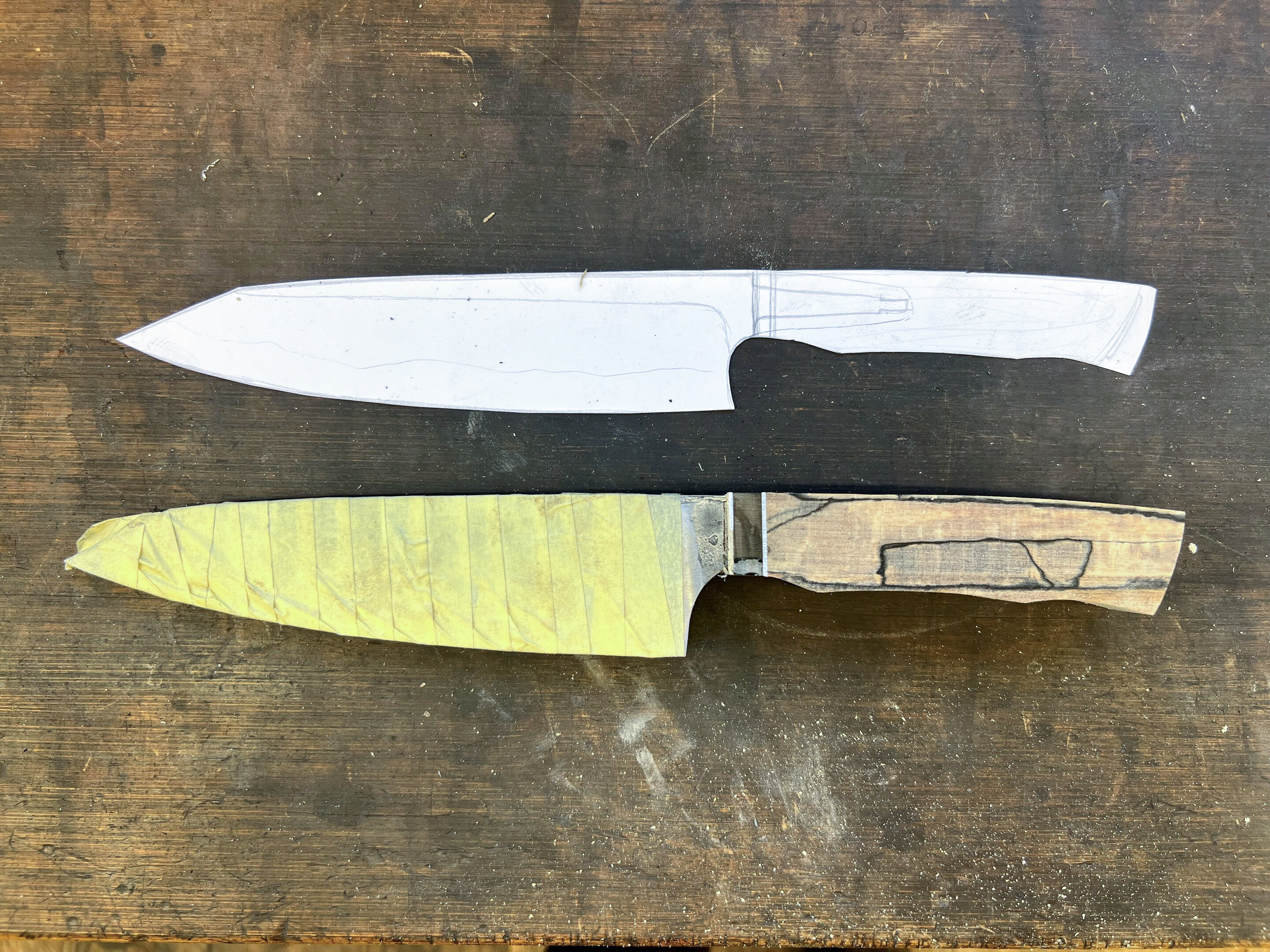
The knife was crafted for Tim Mälzer based on a hand-drawn sketch by knife maker Richard Kappeller.
In creating the design and selecting the materials, the focus was on craftsmanship, down-to-earth values, passion, and memories of Salzburg. A knife for universal use and for ultra-fine cutting work, custom-made for Tim Mälzer.
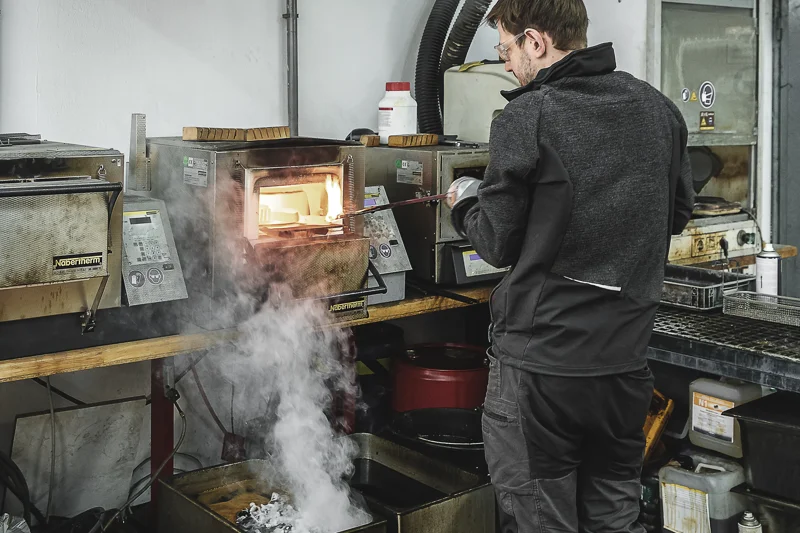
For Mr. Mälzer, the knife is not only meant to be a work of art, but also a tool that symbolizes Salzburg craftsmanship. Since the craft of cooking, uniqueness, and regionality are at the forefront of haute cuisine, I decided to craft the knife using this multi-layered steel, hand-forged in Salzburg.
The core layer of the blade consists of an extremely hard, non-stainless steel designed for wafer-thin cutting tasks and incredible sharpness. Using a nickel interlayer, a hard yet flexible, non-stainless spring steel was forged by hand. This achieves the ideal balance of hardness and flexibility.
The non-stainless blade is characterized by its extreme sharpness, high hardness, and long-lasting edge retention. It is recommended to store the knife in a dry place and oil it regularly after use.
To give the knife another local connection in addition to the hand-forged blade steel, stabilized knotty beech was used for the handle. This regional wood is naturally infested with a fungus and is stabilized with synthetic resin through a complex process. This makes the handle material more resistant to moisture and significantly harder. Additionally, the longitudinal grain perfectly complements the rustic blade with its nickel coating, which also runs lengthwise.
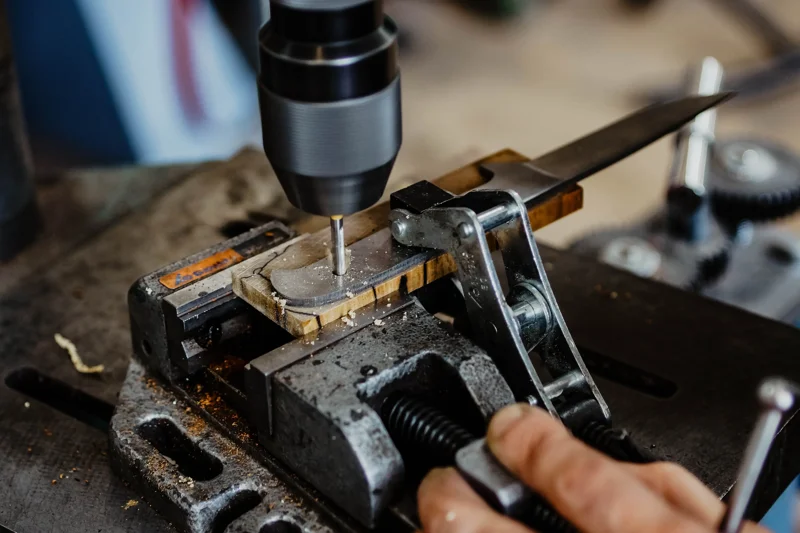
The knife was crafted using the so-called “Spitz-Erl” construction method. This means that the blade tapers slightly in the handle area. From the back, a ferrule with a very precise slot is fitted, and the handle material is drilled out, fitted, and everything is glued together.
This construction is particularly characterized by its light weight, good balance, and high resistance to moisture, as the handle is made as a solid round blank. Thus, no transition can form between the blade steel and the handle material.
Between the blade and the handle, I attached a fitting consisting of two plates of 925 sterling silver and a piece of jet, a type of fossilized lignite.
At the end of the handle, I fitted a 925 silver plate and engraved the inscription by hand under a microscope. Hand-engraved designs look significantly more refined than machine-engraved ones, as the edges can be cut much more precisely, the curves are more elegant, and there is no corner radius as with machine engraving. Thus—with practice and experience—lettering can be engraved much more finely.
The knife was sharpened using four different whetstones and three strop leathers with diamond pastes of varying fineness to achieve the sharpness of a razor.
I wish Mr. Mälzer much joy with this fine knife, which is made for use and will hopefully be used for the finest dishes.
Warm congratulations on the Gault&Millau Ambassador 2026 award
Richard Kappeller
Knife maker