Knife for Vitus Winkler
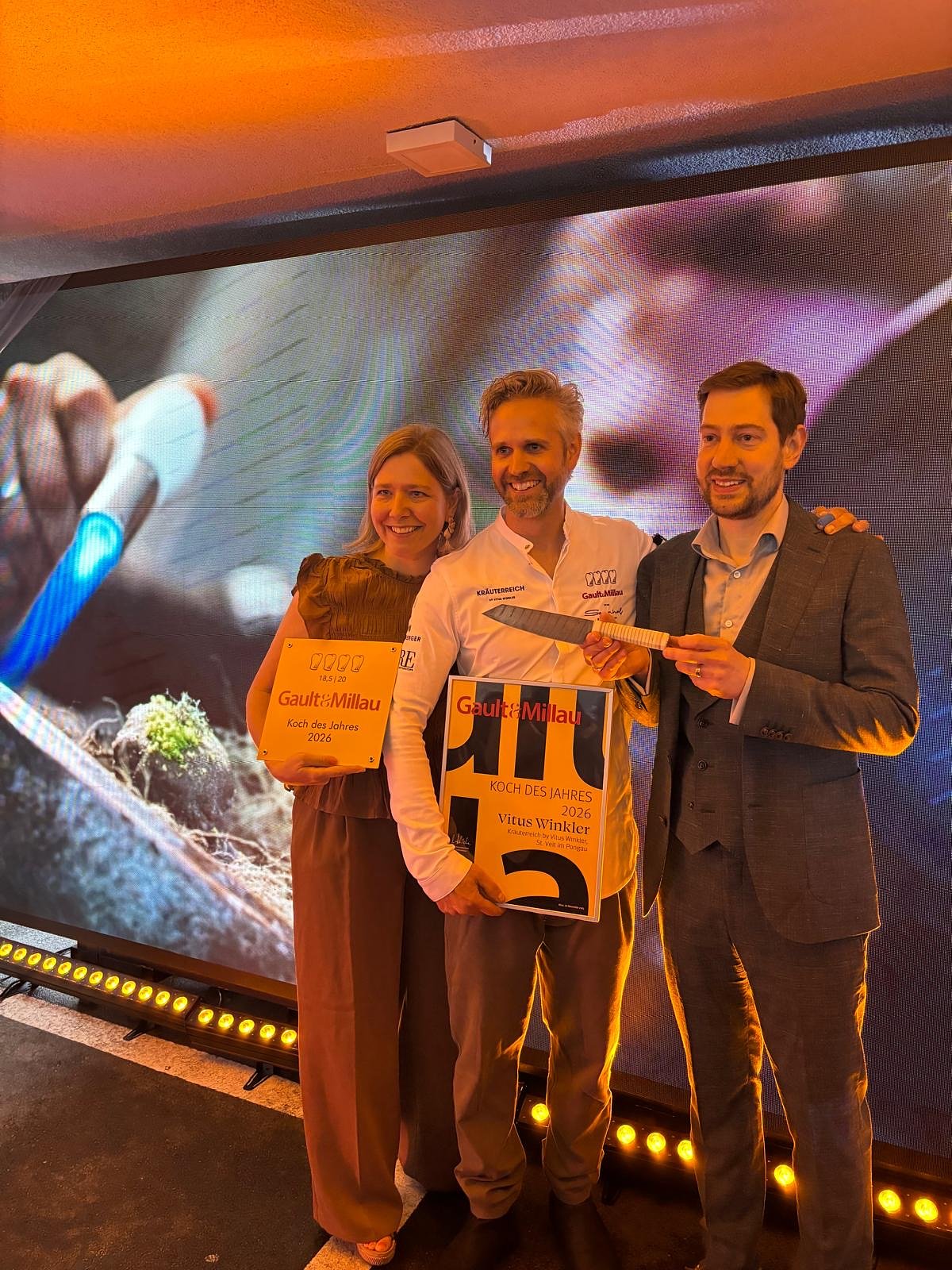
Chef of the Year 2026
Overall length: 335 mm
Blade length: 210 mm
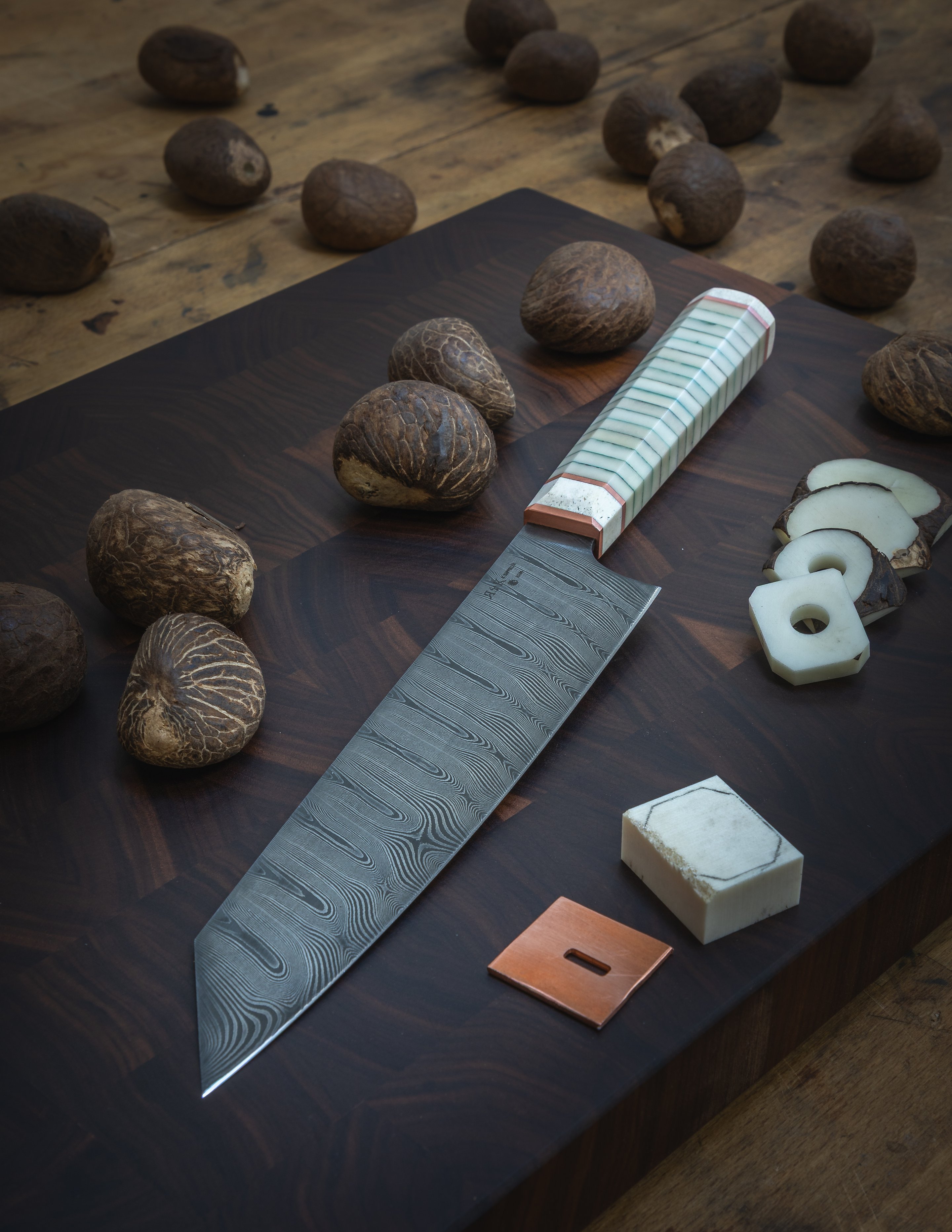
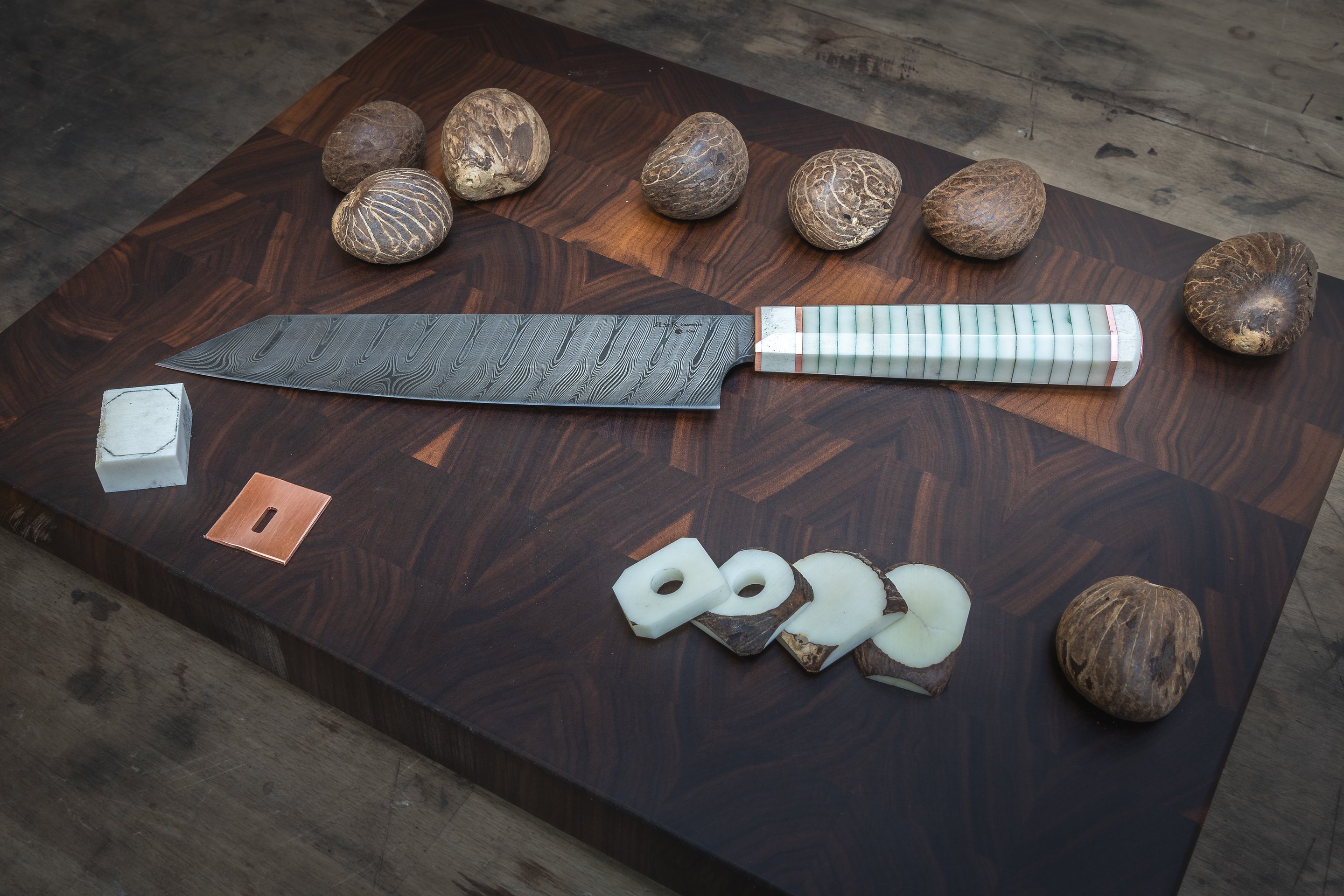
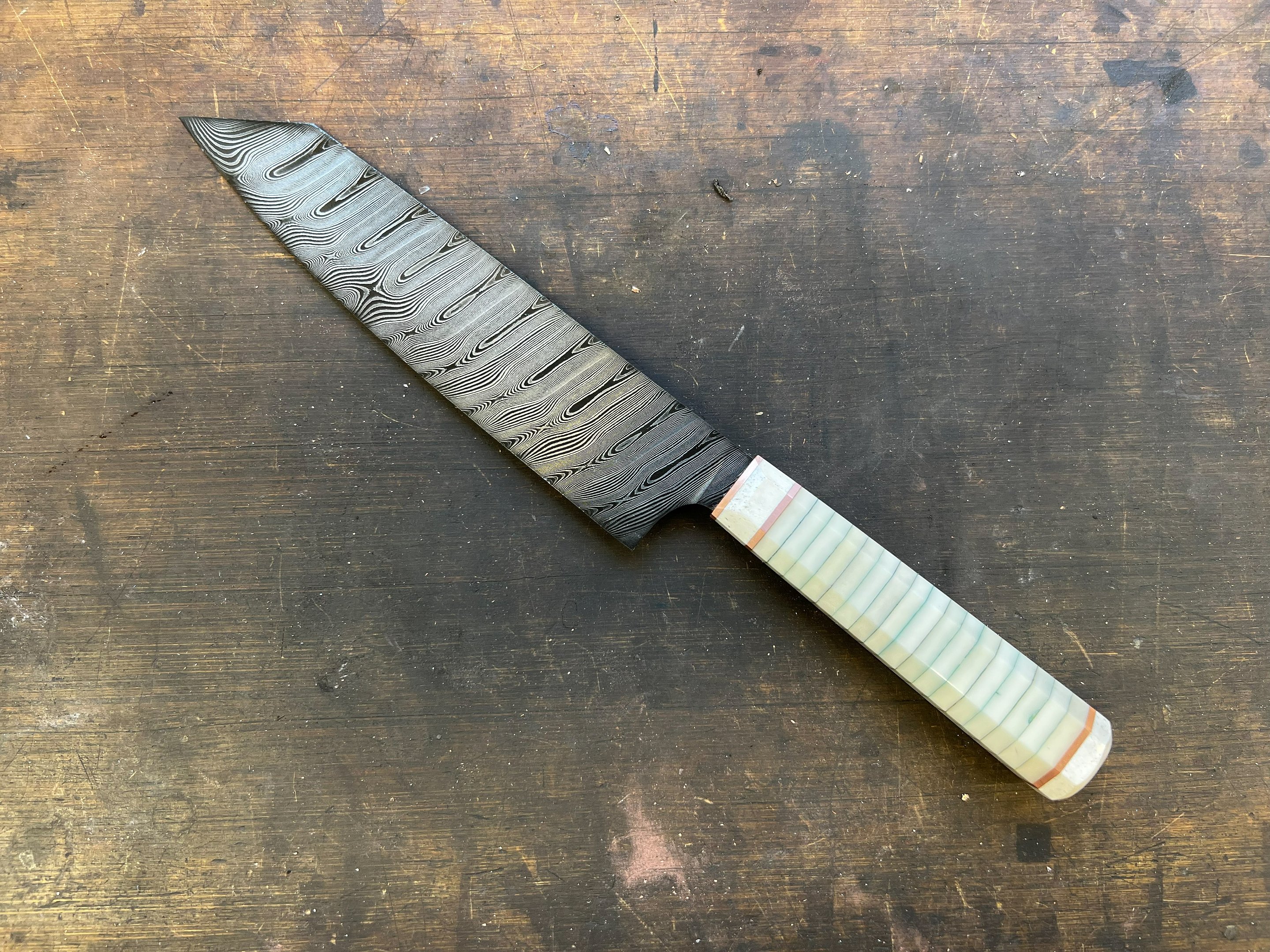
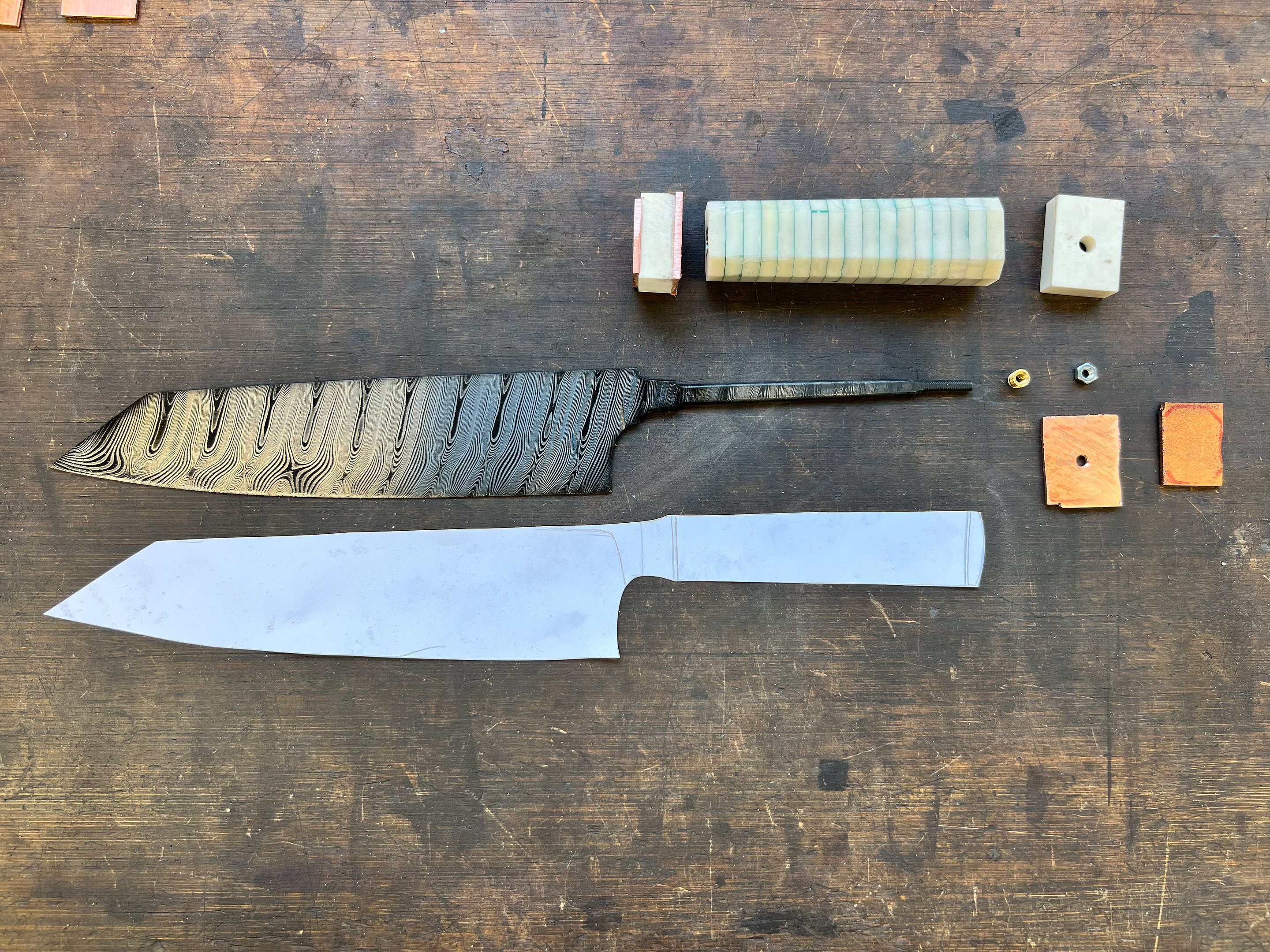
Blade steel: Torsion Damascus (not stainless/black etched)
Handle material: Mosaic of tagua nut and antler rose
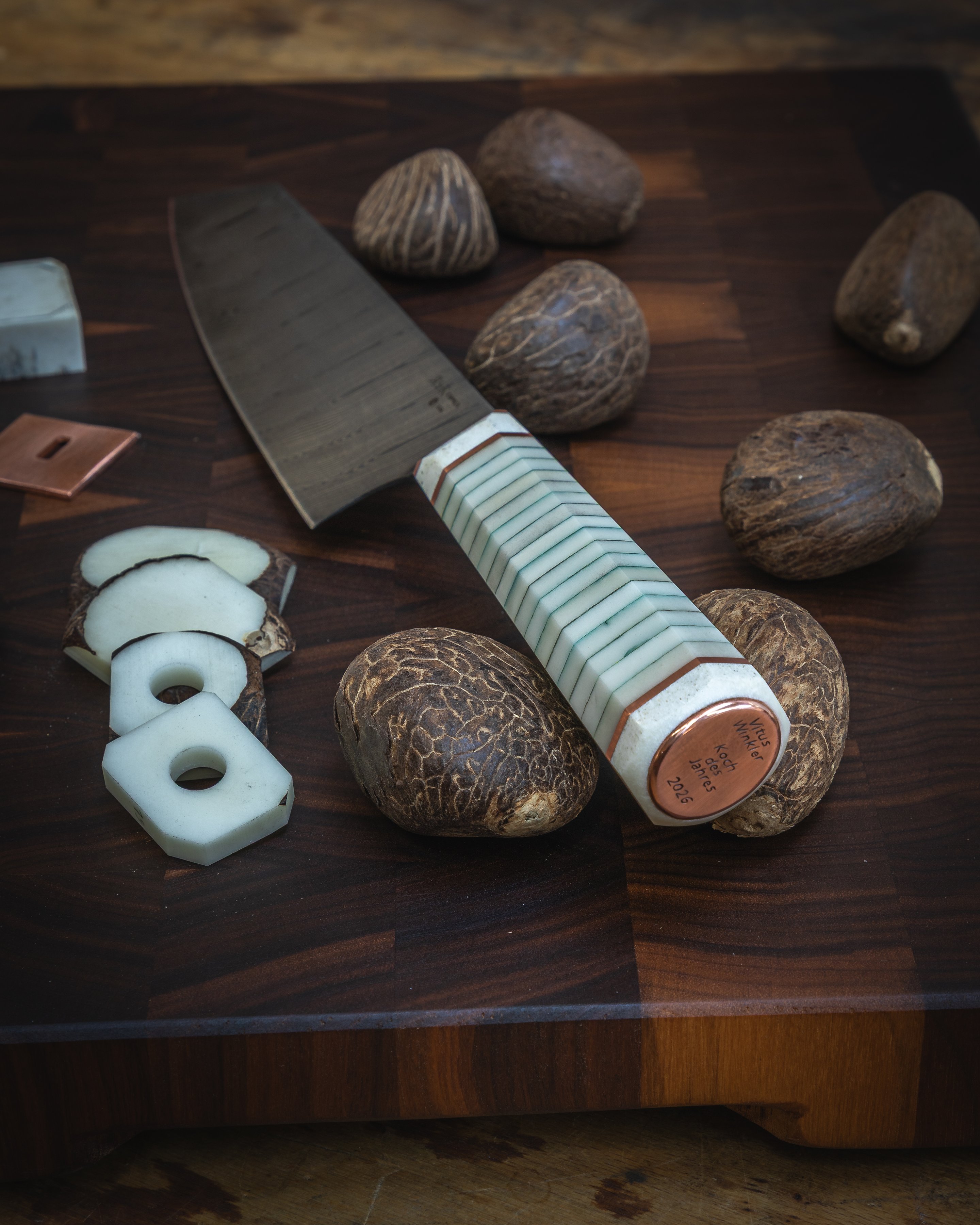
End plate: Copper
Pommel and spacer: Copper
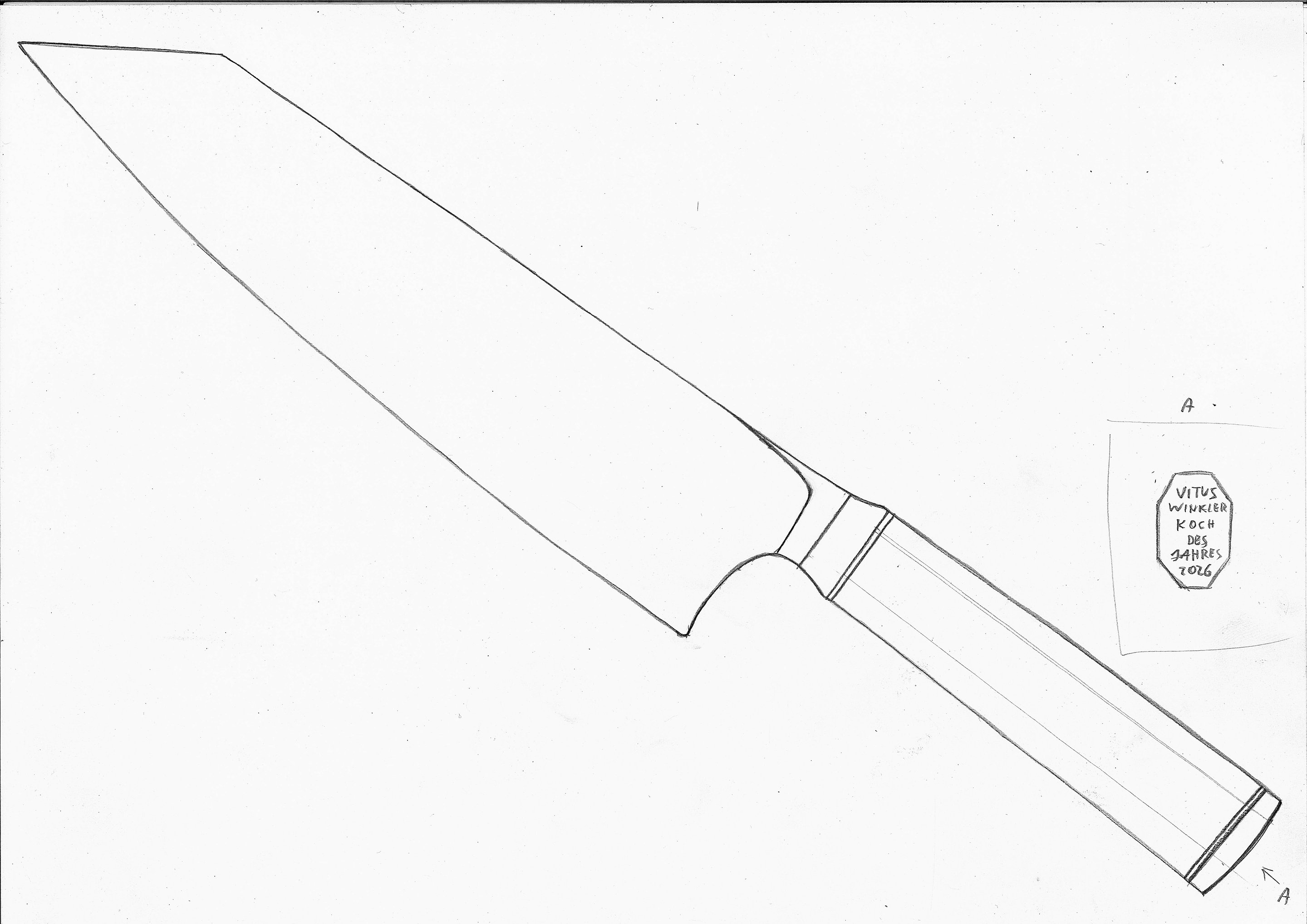
This knife was made based on a hand sketch by me, Richard Kappeller, for Vitus Winkler, Chef of the Year 2026.
In the design, it was important to me to establish a connection to Asian culture. Both Mr. Winkler and I had the opportunity to be part of the Austrian presentation in Osaka last year – although not at the same time. This connection to Japan and Austrian cuisine should be reflected in the form, material, and expression of the knife.
The blade shape is ideal for cutting vegetables and herbs, but is equally suitable for universal use in the kitchen. It combines precision, lightness, and versatility – qualities that are in daily demand in fine dining.
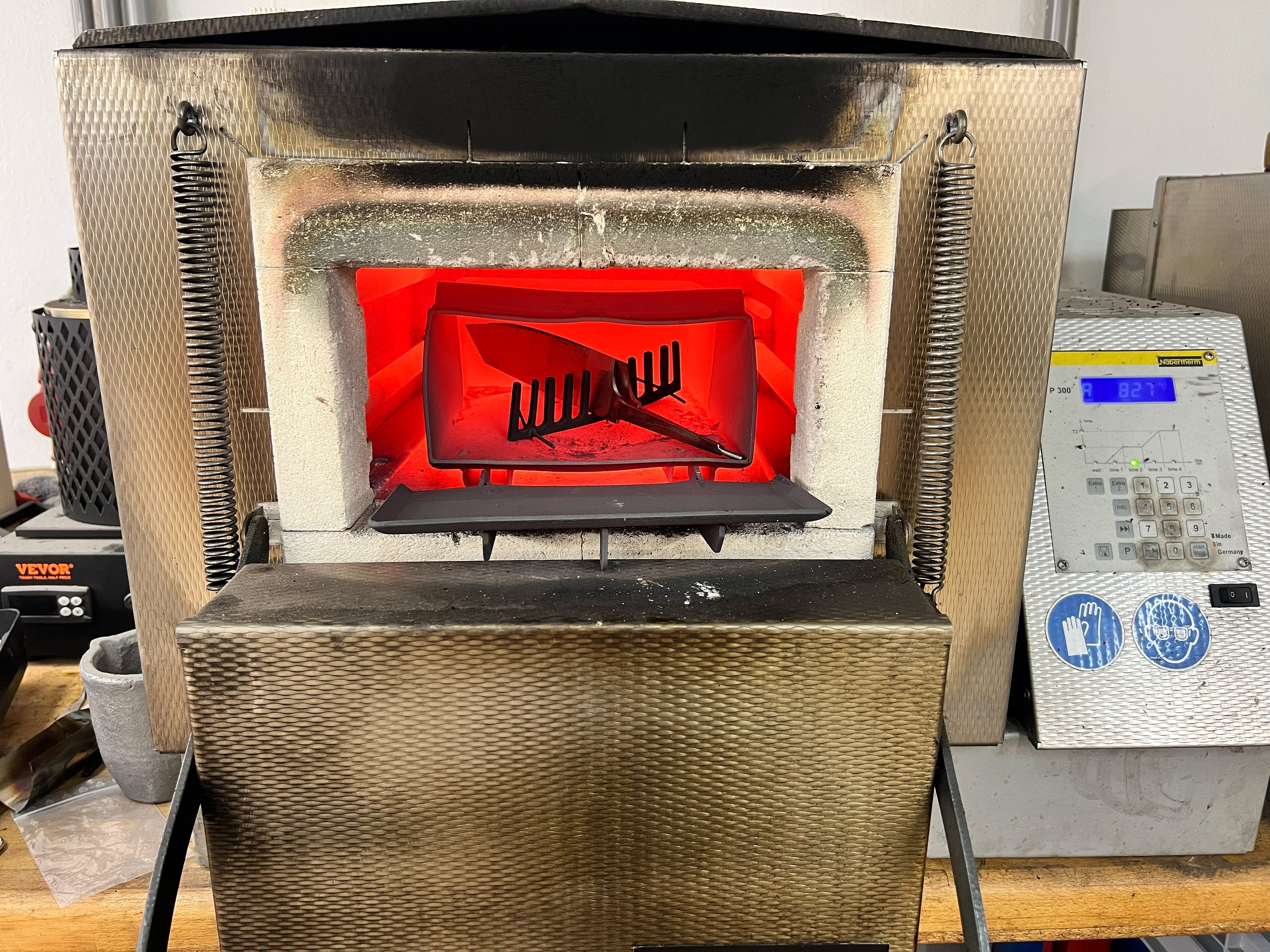
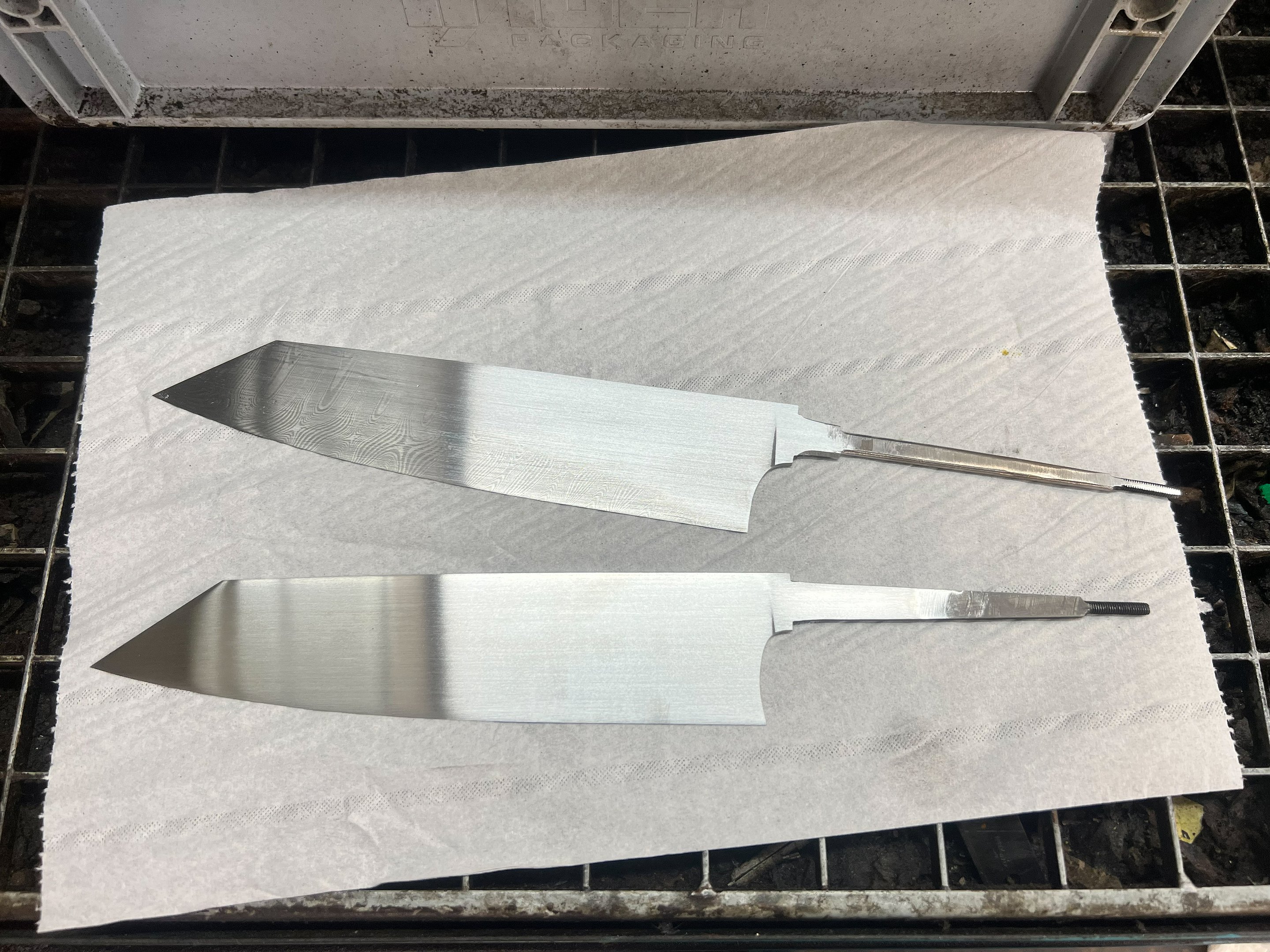
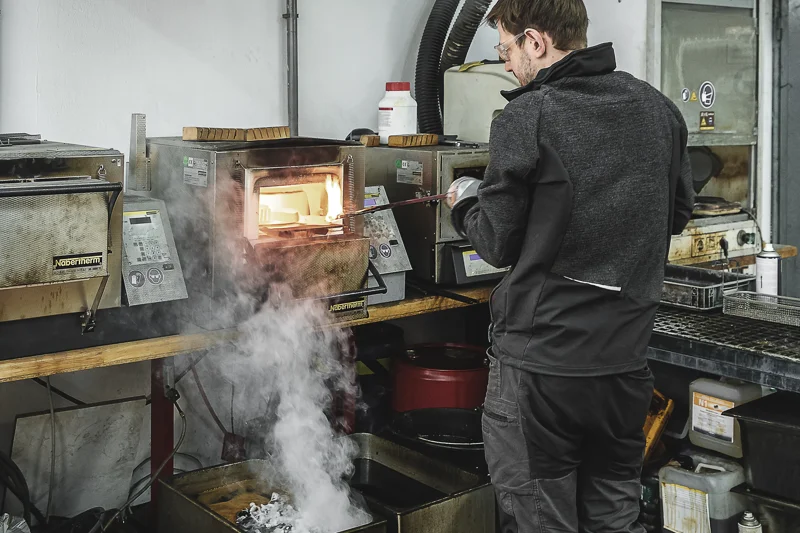
The blade is crafted from hand-forged torsion Damascus steel. This process involves forging together a particularly hard and a more flexible steel, then twisting them together. The characteristic pattern emerges through etching the blade. In a further step, the blade is etched black with a special solution, so that even the raised Damascus elements appear dark. This finish complements the knife's style perfectly and also provides protection against rapid tarnishing.
The non-stainless steel blade is characterized by its extreme sharpness, high hardness, and long-lasting edge retention. Dry storage and regular oiling after use are recommended.
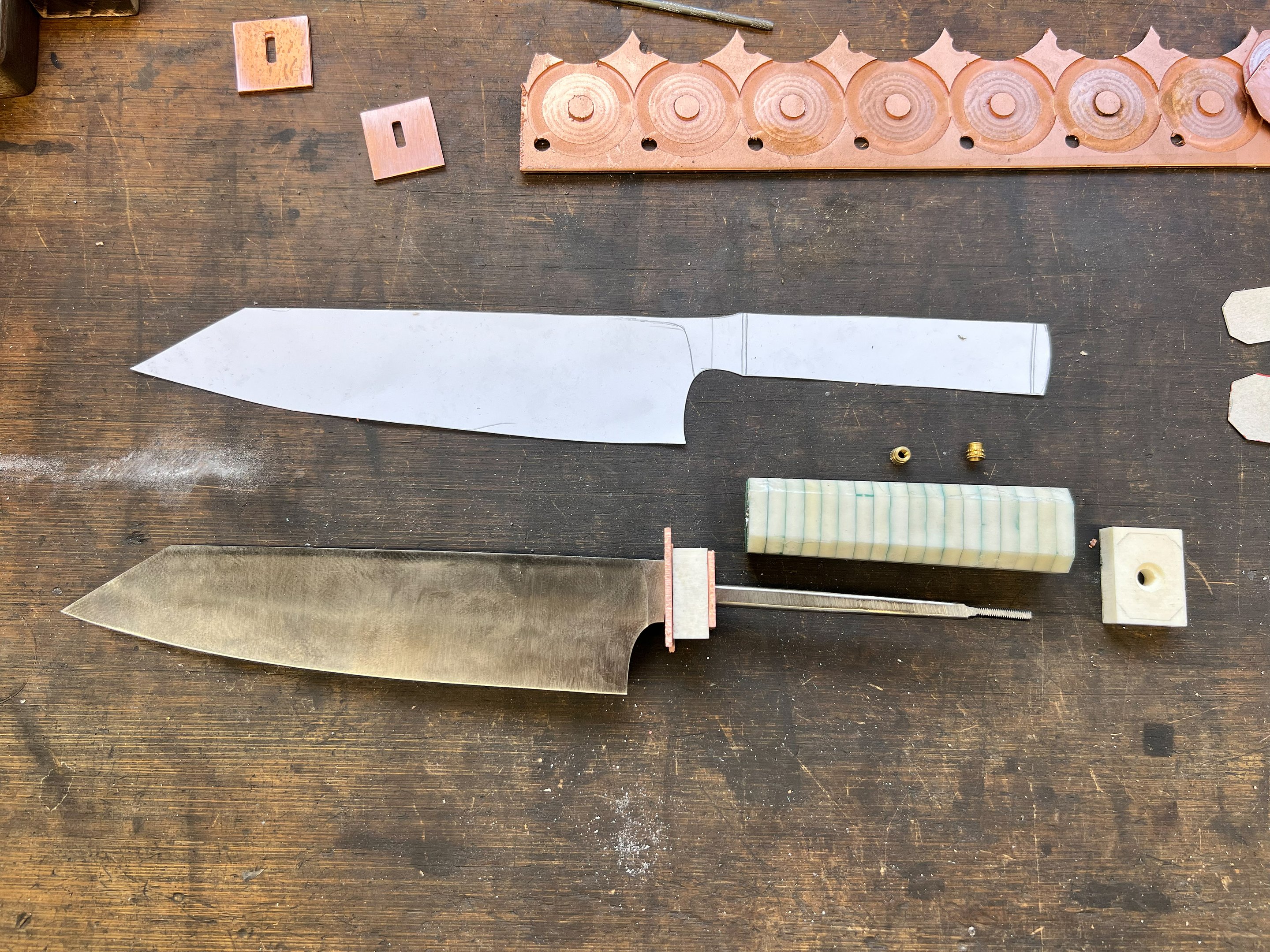
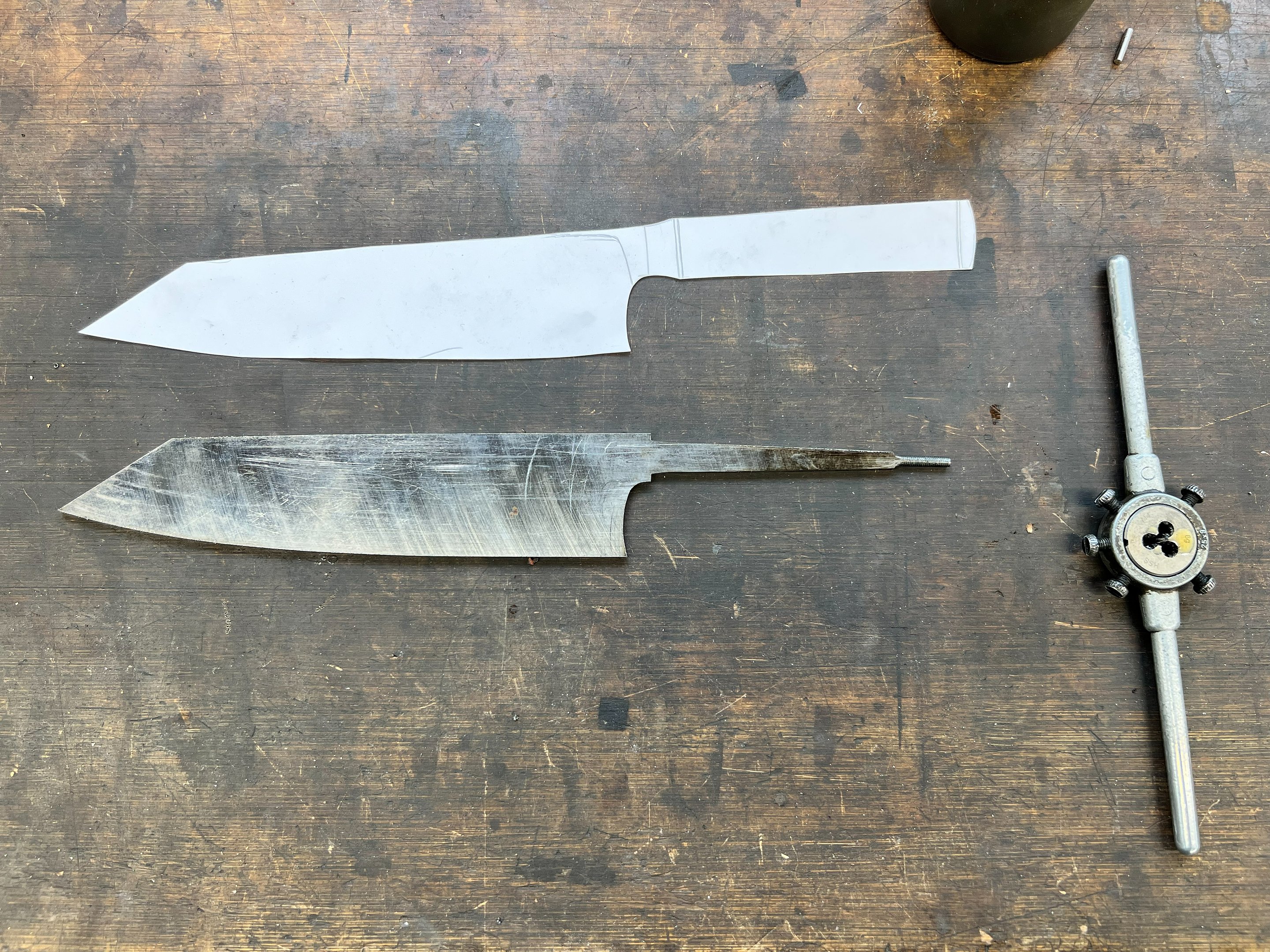
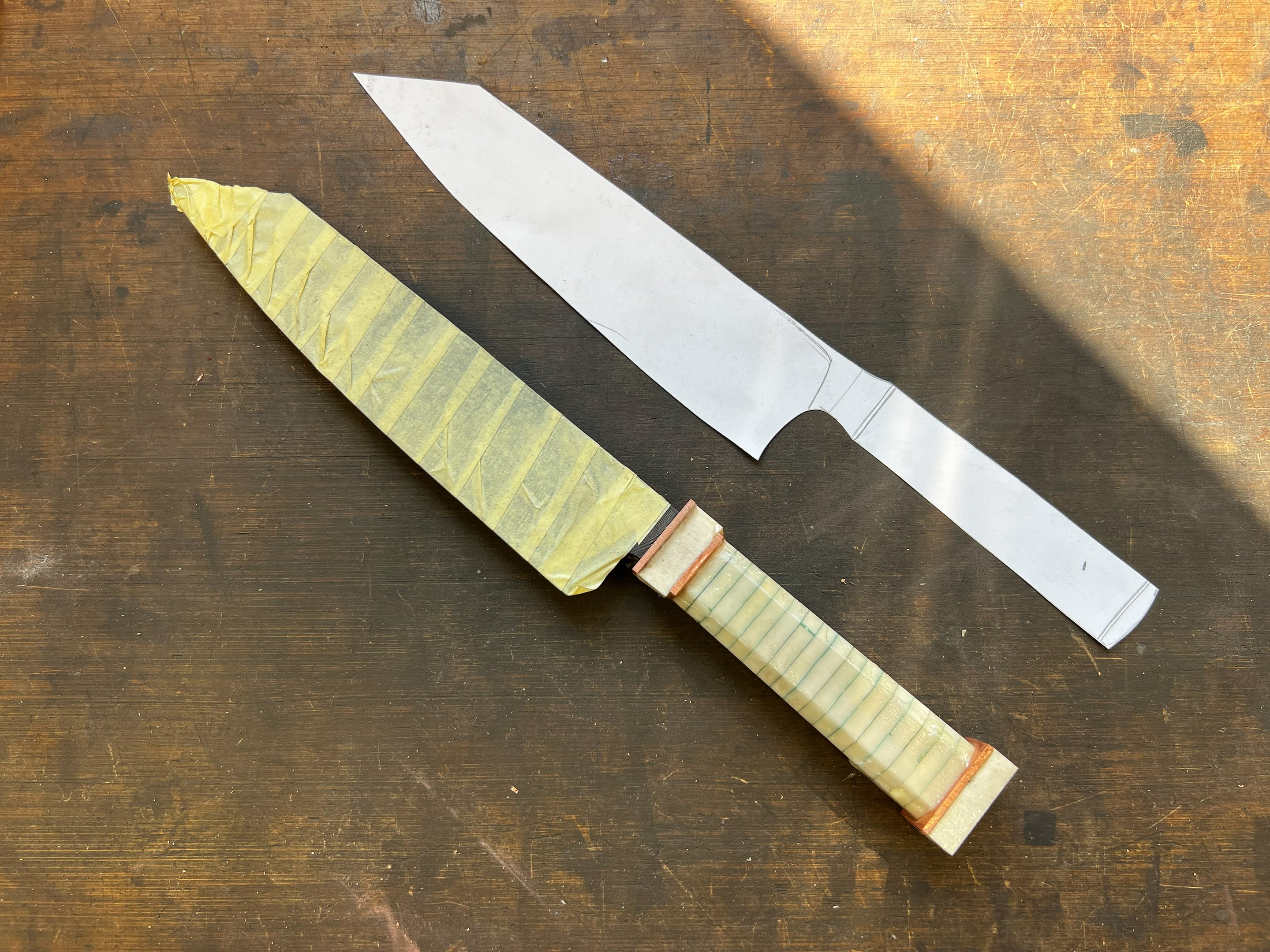
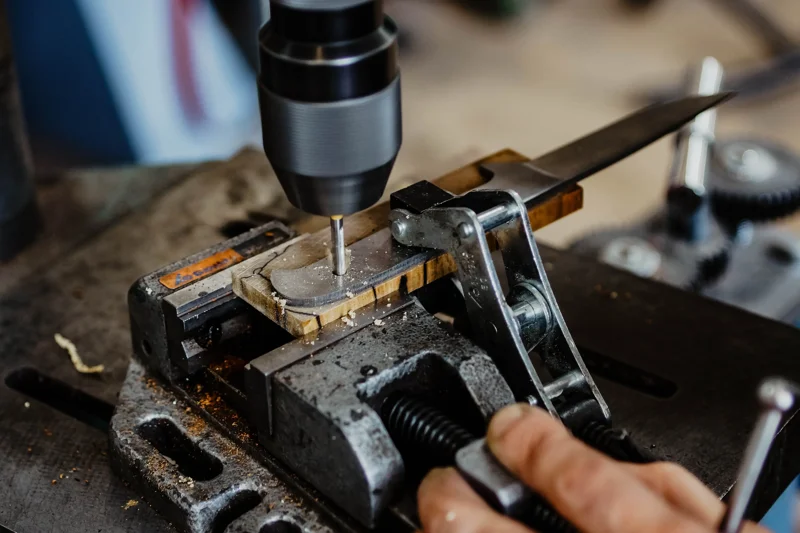
The knife was crafted using a so-called "pointed tang" construction. This means the blade is slightly tapered at the handle. A ferrule with a very precisely machined slot is attached from the back; the handle material is drilled, fitted, and then permanently glued in place. This construction method is particularly distinguished by its light weight and excellent balance.
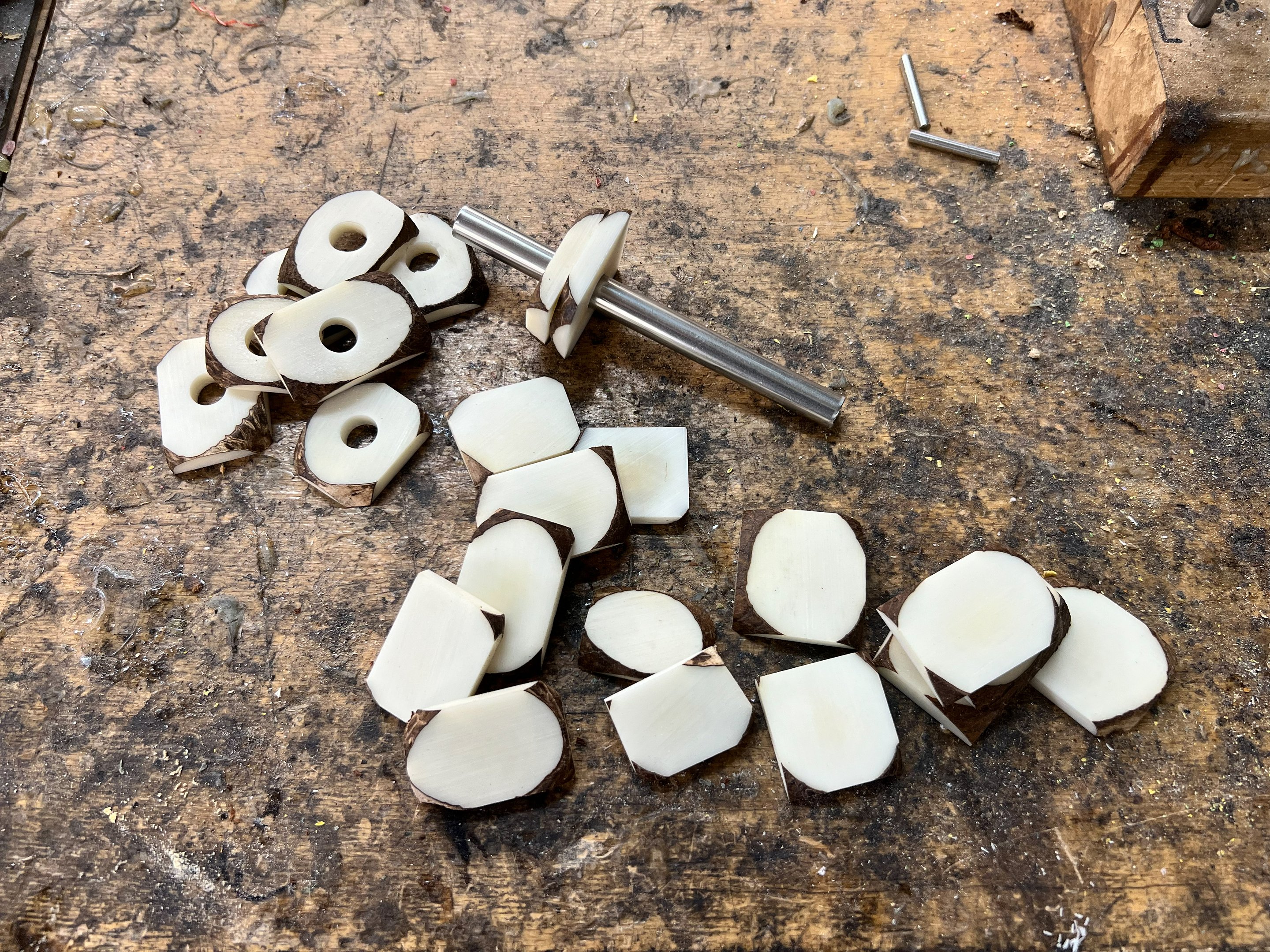
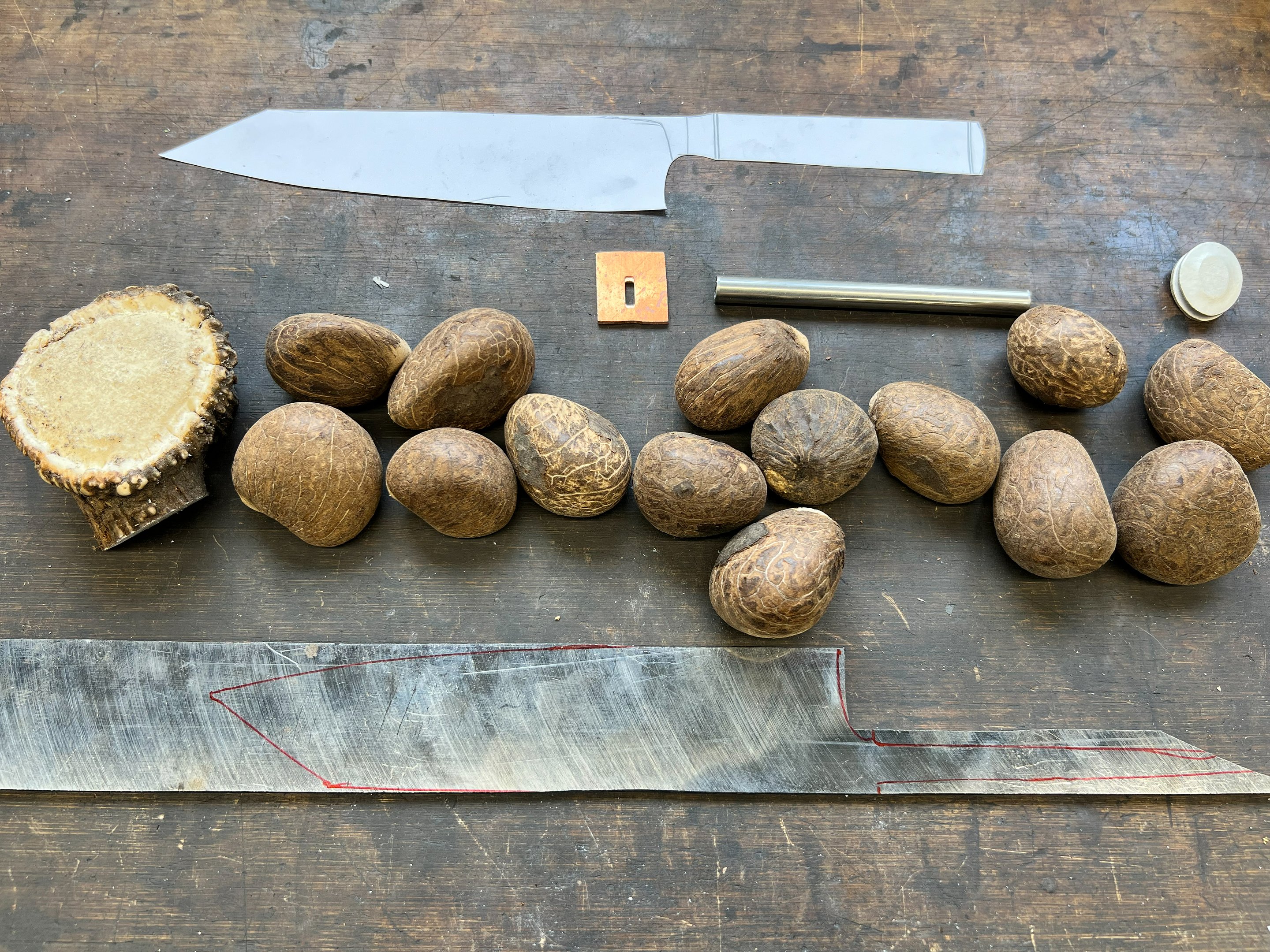
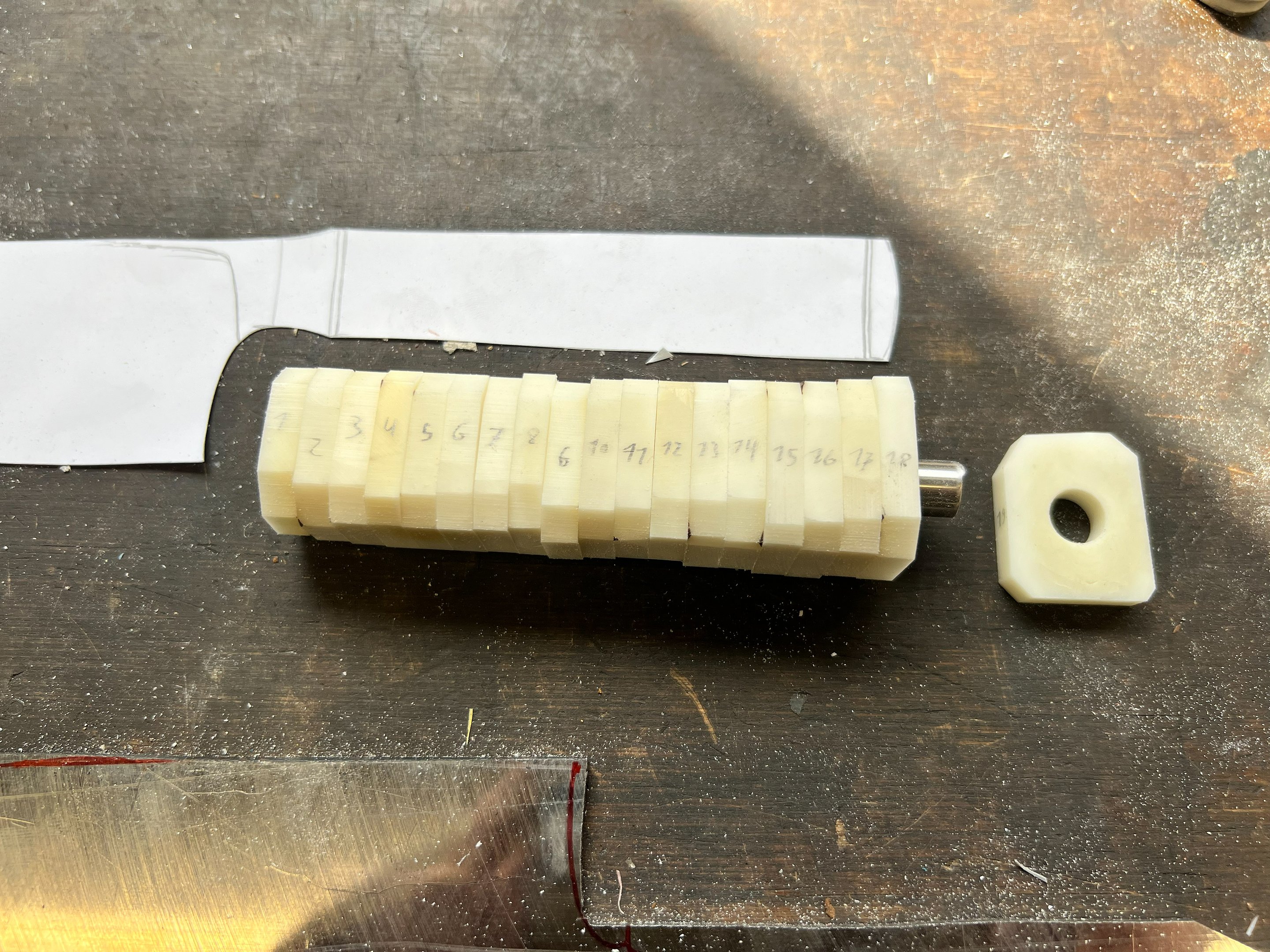
Since herbs are often finely chopped, I also sliced the handle material into thin slices. I used slices of tagua nut, the seed of a palm tree native to South America, including Brazil. This material is also known as plant-based or vegan ivory and has long been used for high-quality art objects.
I need about one kilogram of tagua nuts for each handle. These were sliced thinly, laminated with green resin, and finished at the beginning and end of the handle with copper-set deer rosettes. This creates a conscious connection to Alpine cuisine and Vitus Winkler's homeland.
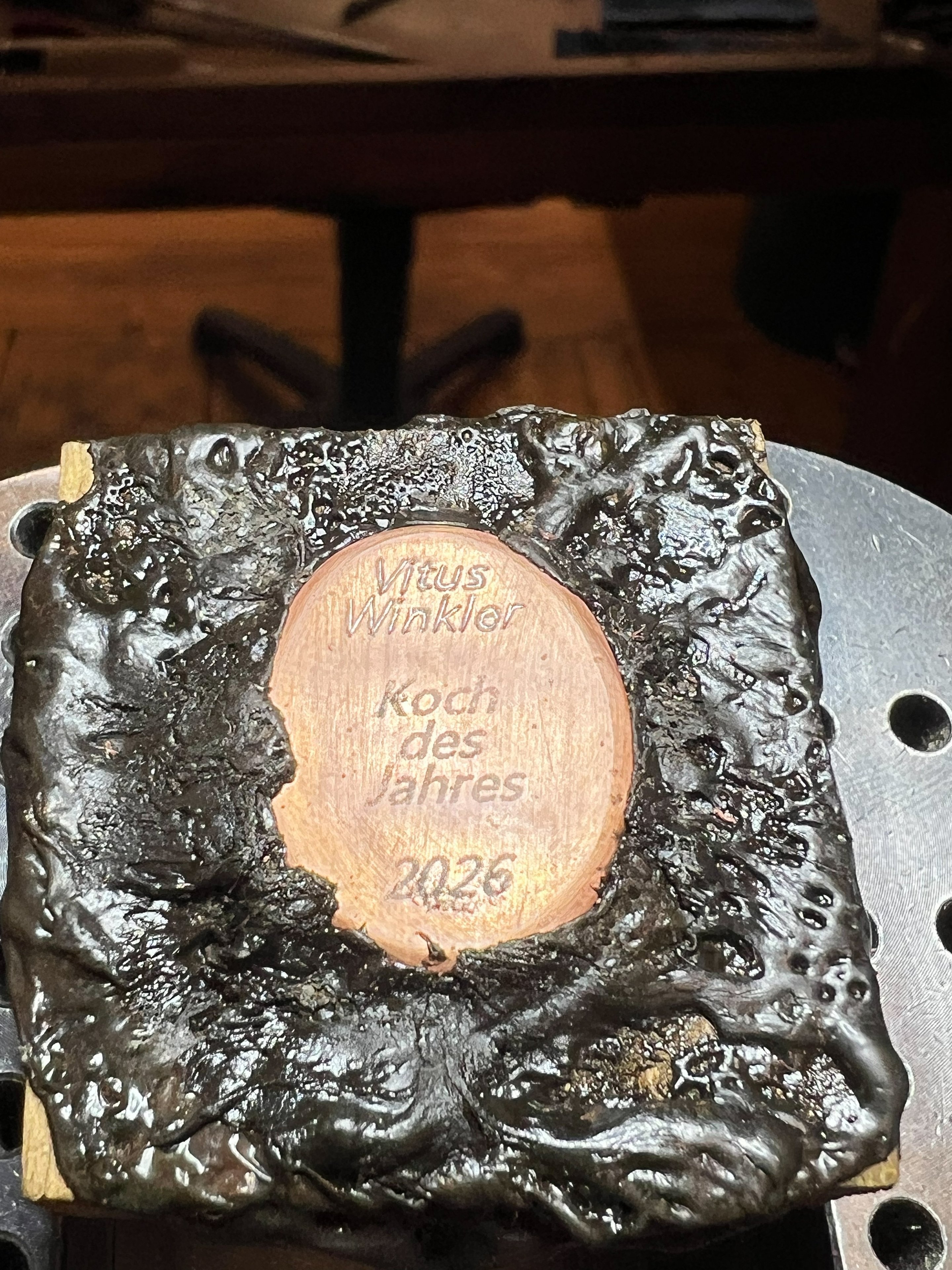
A copper plate was fitted at the end of the handle and engraved by hand under a microscope. Hand-engraved designs appear significantly more refined than machine engravings because the edges can be cut more precisely, the curves are more elegant, and there is no corner radius as with machine engraving. With practice and experience, lettering can be executed much more finely and dynamically.
The knife was sharpened with four different whetstones and three leather strops with varying degrees of diamond paste to achieve a razor-sharp edge.
With this special knife project, it was important to me to create a work of art with genuine practical value: a knife that fits into the series of previous Chef of the Year knives while clearly distinguishing itself through its choice of materials, shape, and craftsmanship.
I wish Mr. Vitus Winkler much joy with this exquisite knife. It is made for use—and hopefully destined for the most exquisite dishes.
Congratulations on being named Chef of the Year 2026!
Richard Kappeller
Knife Maker