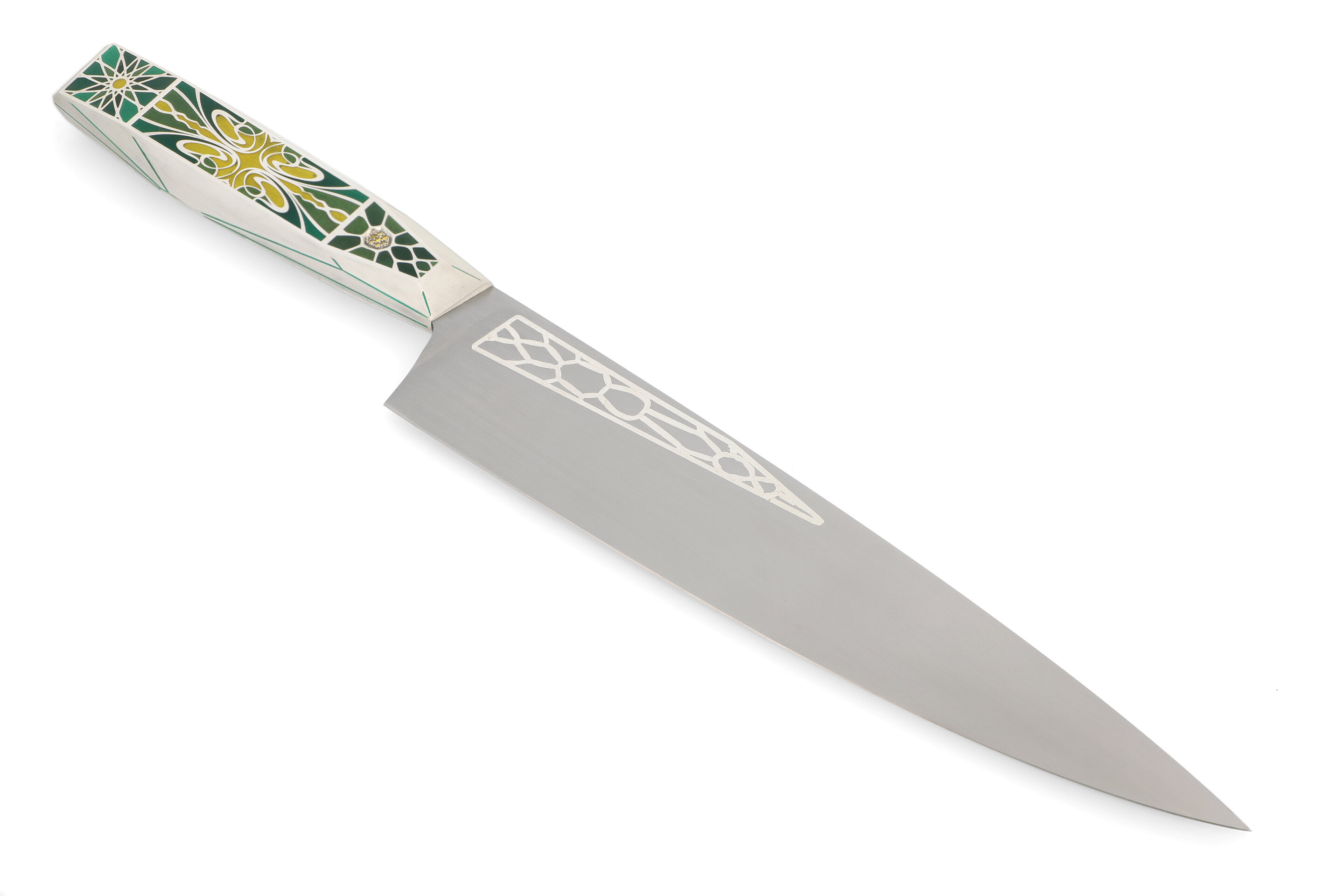
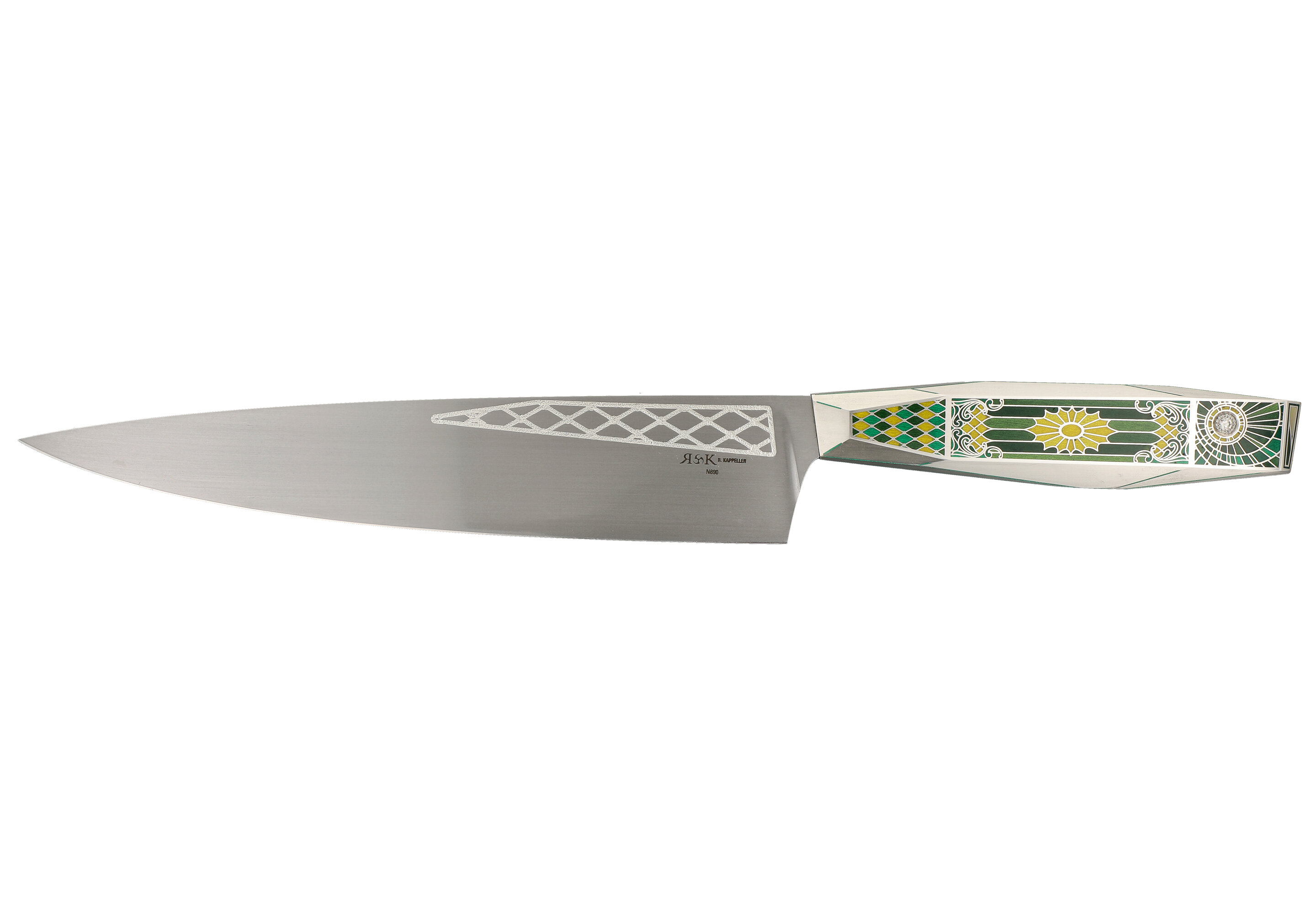
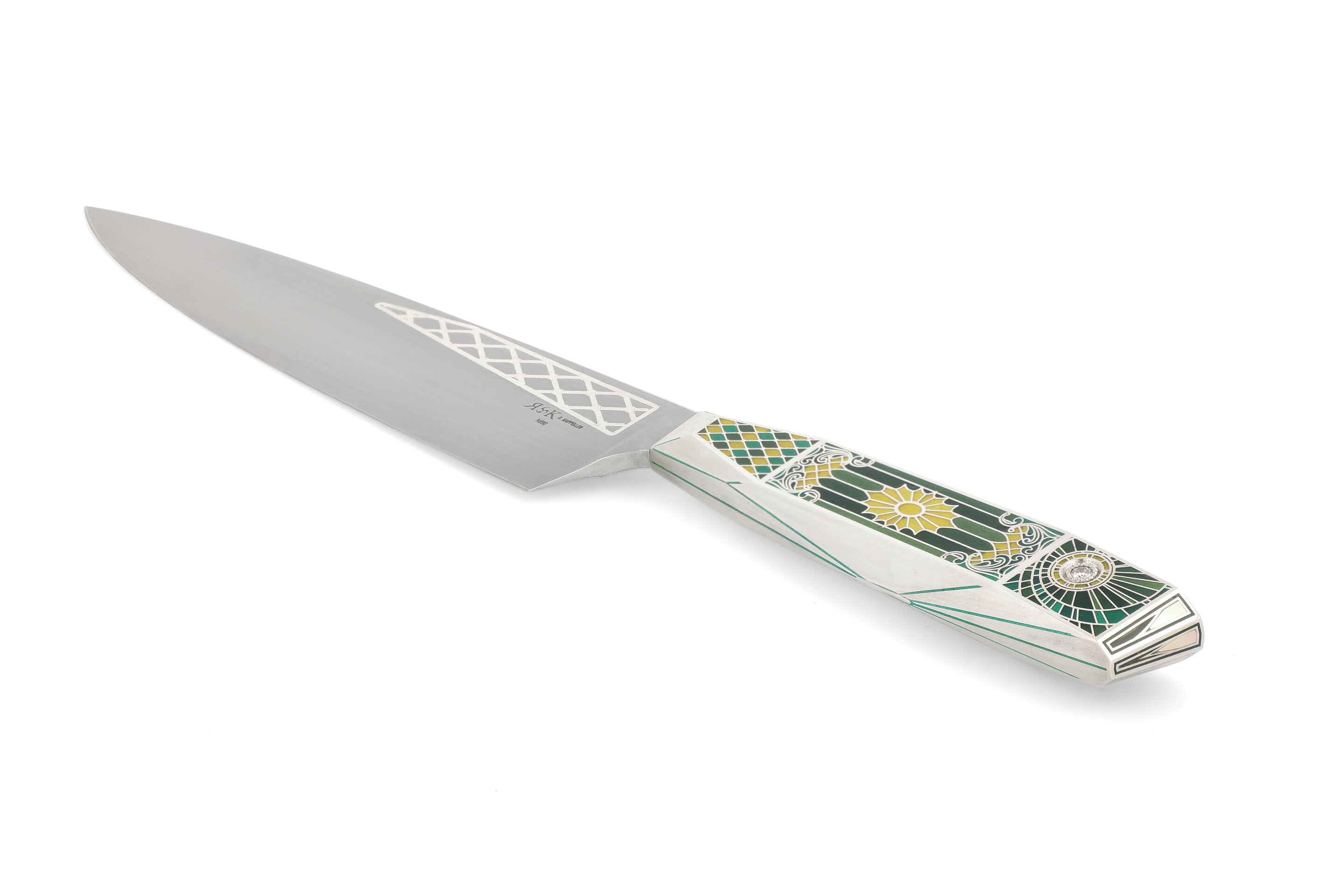
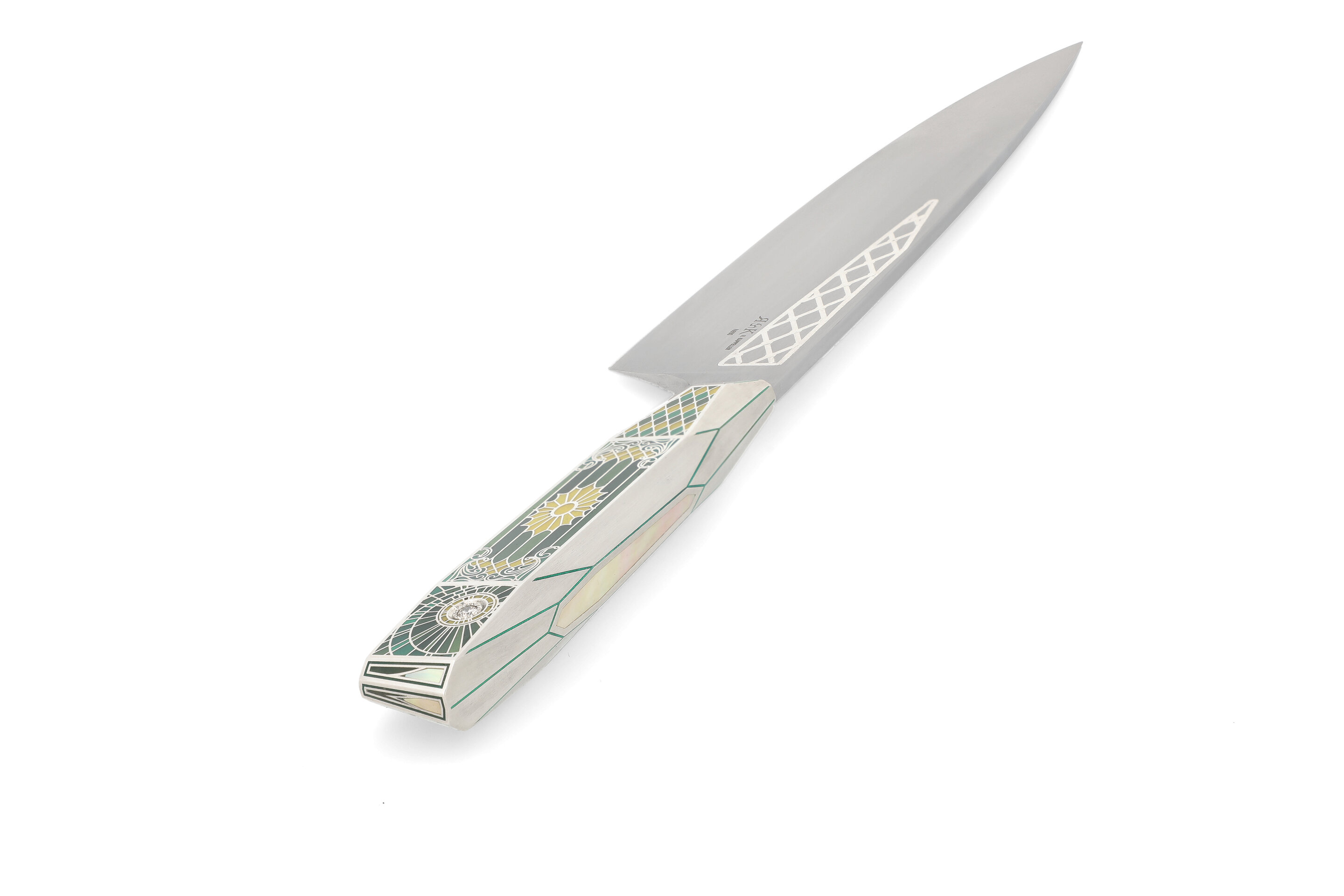
Carving knife "Journey through the ages"
2nd place at the Salzburg Craftmanship Award 2024
The Salzburg Craftmanship Award highlights masterful, creative and innovative accomplishments of Salzburg's trade and craft businesses. The award is presented at the event “The Festival of Craftsmanship” and not only provides a platform for recognizing outstanding achievements but also offers a glimpse into the region’s creativity and craftsmanship.
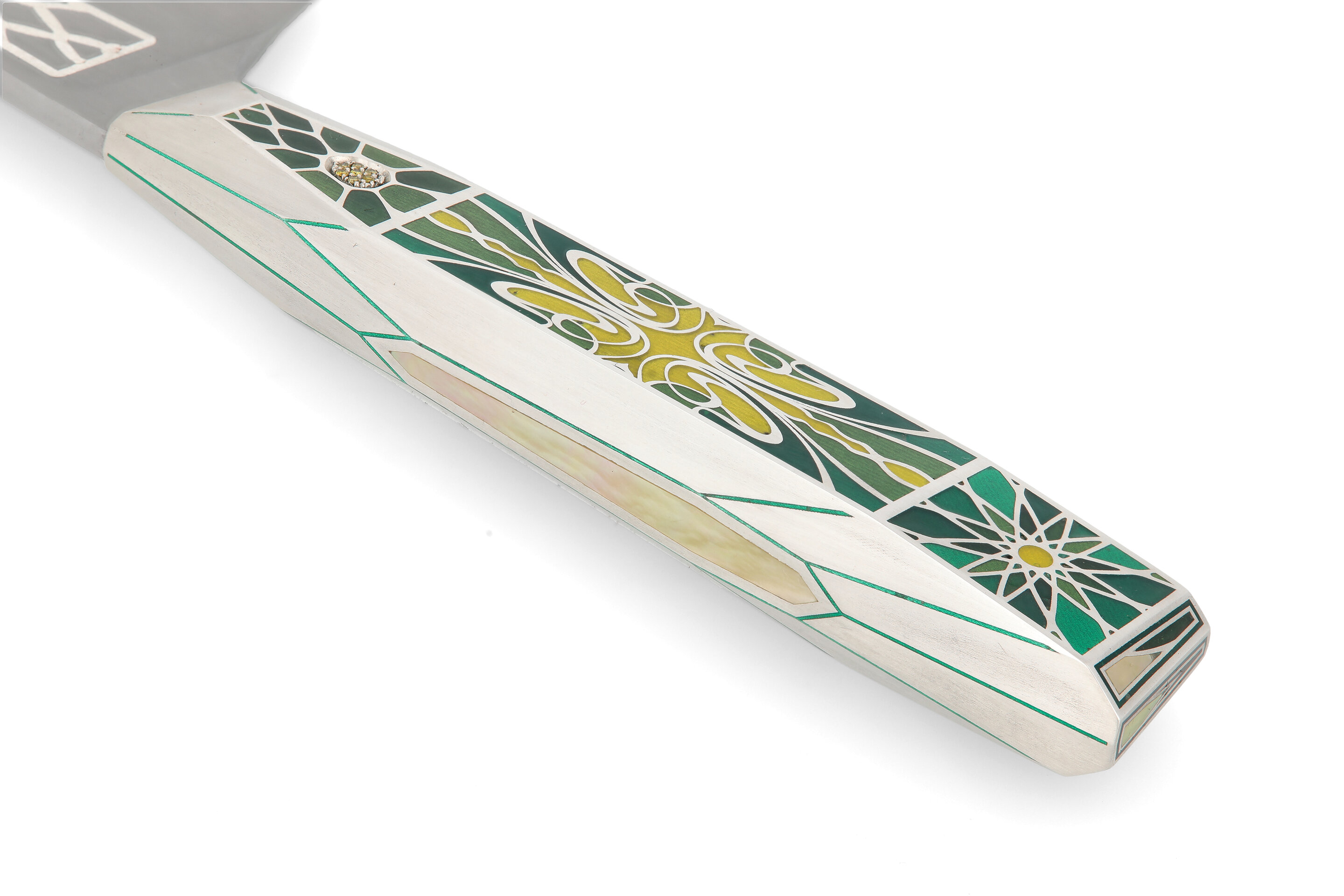
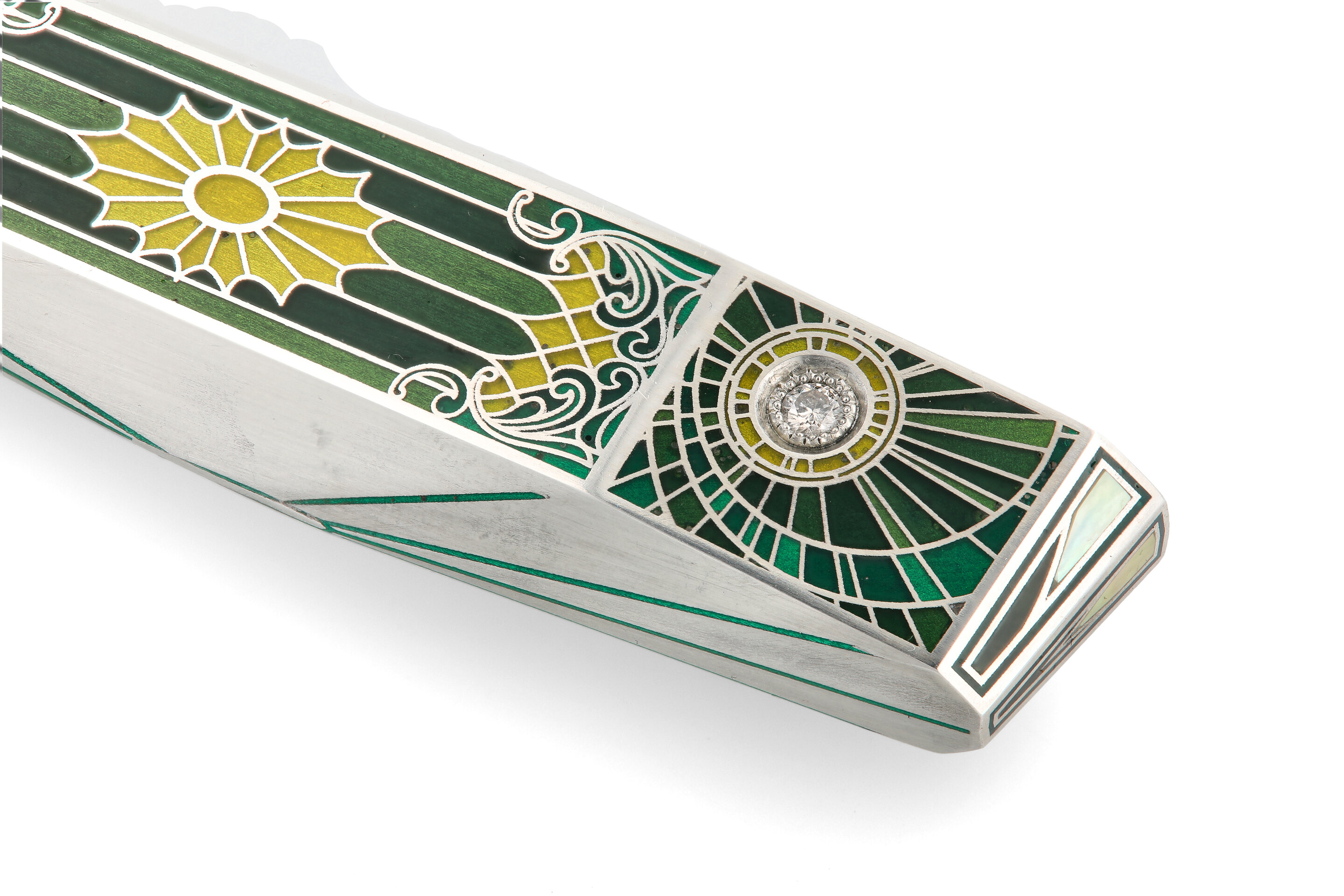
Second place went to Messermacher Kappeller GmbH for its “Journey through the ages” carving knife. This unique knife, featuring an artfully engraved silver handle, reflects various eras—from the Renaissance to Art Nouveau. Each engraving transforms the knife into a true work of art that combines tradition and timeless elegance. It was also exhibited at this year’s Venice Biennale.
The “Journey through the ages” carving knife was also featured at the Venice Biennale. It was selected as an exhibit for the “Homo Faber 2024” – The Journey of Life exhibition. The exhibition features many well-known artists and brands from around the world and focuses on the connection between art, craftsmanship, and human creativity. It presents a curated selection of objects that combine both traditional techniques and modern innovations in craftsmanship. The exhibition demonstrates how craftsmanship reflects the various phases of human life, from origins and traditions to contemporary interpretations and visions of the future.
Total length: 325 mm
Blade length: 200 mm
Blade steel: Böhler N690
Handle material: 925 sterling silver – ornaments filled with cold enamel
Blade
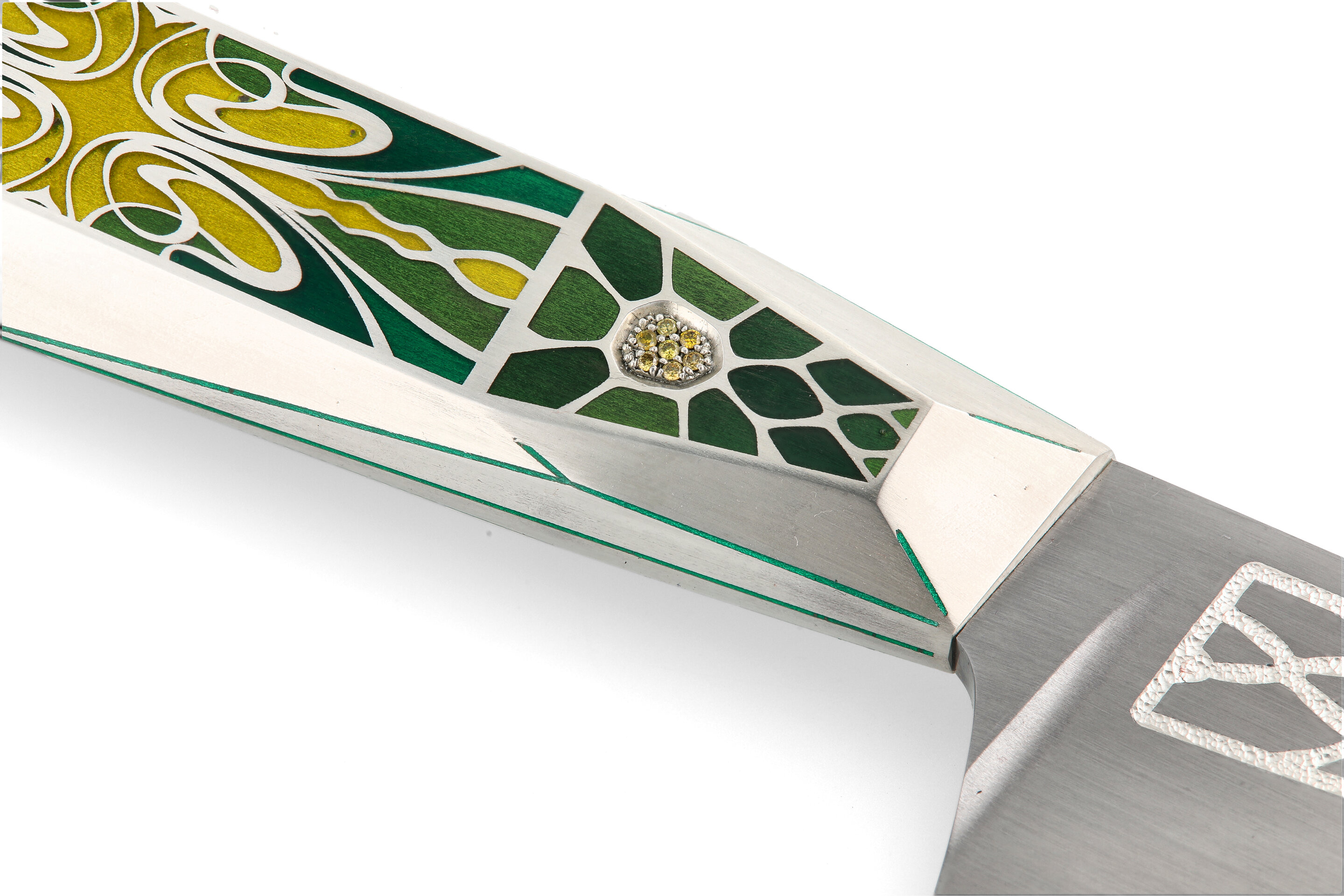
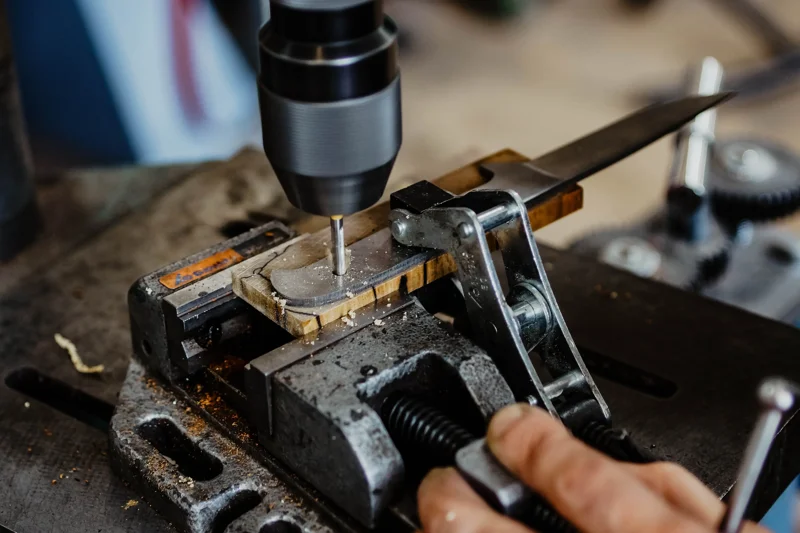
The blade was crafted from Böhler N690 steel based on a 3D model. The recesses for the inlays were milled with a 6° undercut. A 925 silver wire was inserted by hand into these recesses and textured.
Silver handle
The handle of the carving knife is cast from 925 sterling silver. Its geometric shape has a futuristic look. From Greek and Roman times to the present day, silverware has been regarded as a hallmark of fine dining.
The process of silver casting has been known since the early Bronze Age and remains widely used today. To manufacture the handle, a 3D model was first created, which precisely depicts all engravings as well as the handle’s internal structure, including support struts and a fitting for the blade tang. The flow behavior of the molten silver was also taken into account during the digital design of the handle to ensure a perfect silver casting. A model was 3D-printed from wax to cast the handle in silver.
Enamel-filled ornaments adorn the handle. These are inspired by eras ranging from Gothic to Art Nouveau and Art Deco. The motifs consist of geometric and floral forms. The aesthetic evokes light-filled cathedrals and delicate stained-glass windows. At the same time, the elements draw inspiration from nature and appear dynamic and modern.
The enamel technique was already known as early as 3500 BC. Used exclusively as a decorative element at that time, this technique remains widely used today. Due to its excellent durability, its particular suitability for food contact, and its decorative nature, enamel is found especially on kitchen utensils.
A modern development is cold enamel, a synthetic resin mixed with color pigments. It has the advantage that, unlike traditional enamel, it does not need to be fired, and thus silver can also be coated with it.